
The Ghana Gold Board has started talking to the World Gold Council about a possible strategic relationship that would help formalize the artisanal small-scale mining (ASM) sector and improve traceability throughout Ghana’s gold value chain.
On Tuesday, January 6, 2026, in Accra, the Chief Executive Officer of the World Gold Council, David Tait, the Chief Executive Officer of GoldBod, Sammy Gyamfi, Esq., the Deputy Chief Executive Officer of Goldbod, Richard Nunekpeku, Esq., and members of the Governing Board of the GoldBod, led by its Chairman, Mr. Kojo Fynn, all met.
The talks were mostly about using new traceability technologies, building environmentally friendly processing units for ASM gold, and making sure that Ghana’s gold governance structure is in line with the best standards throughout the world.
Mr. Tait stated at the conference that the World Gold Council wanted to learn more about Ghana’s gold ecosystem and the amount of political and institutional commitment before getting further involved.
He said, “What we’ve been trying to figure out is how things work in Ghana, what the priorities are, and how committed everyone is, not just institutions like yours, but also the government. This way, when we get involved, we can feel good about putting resources where they are needed.”
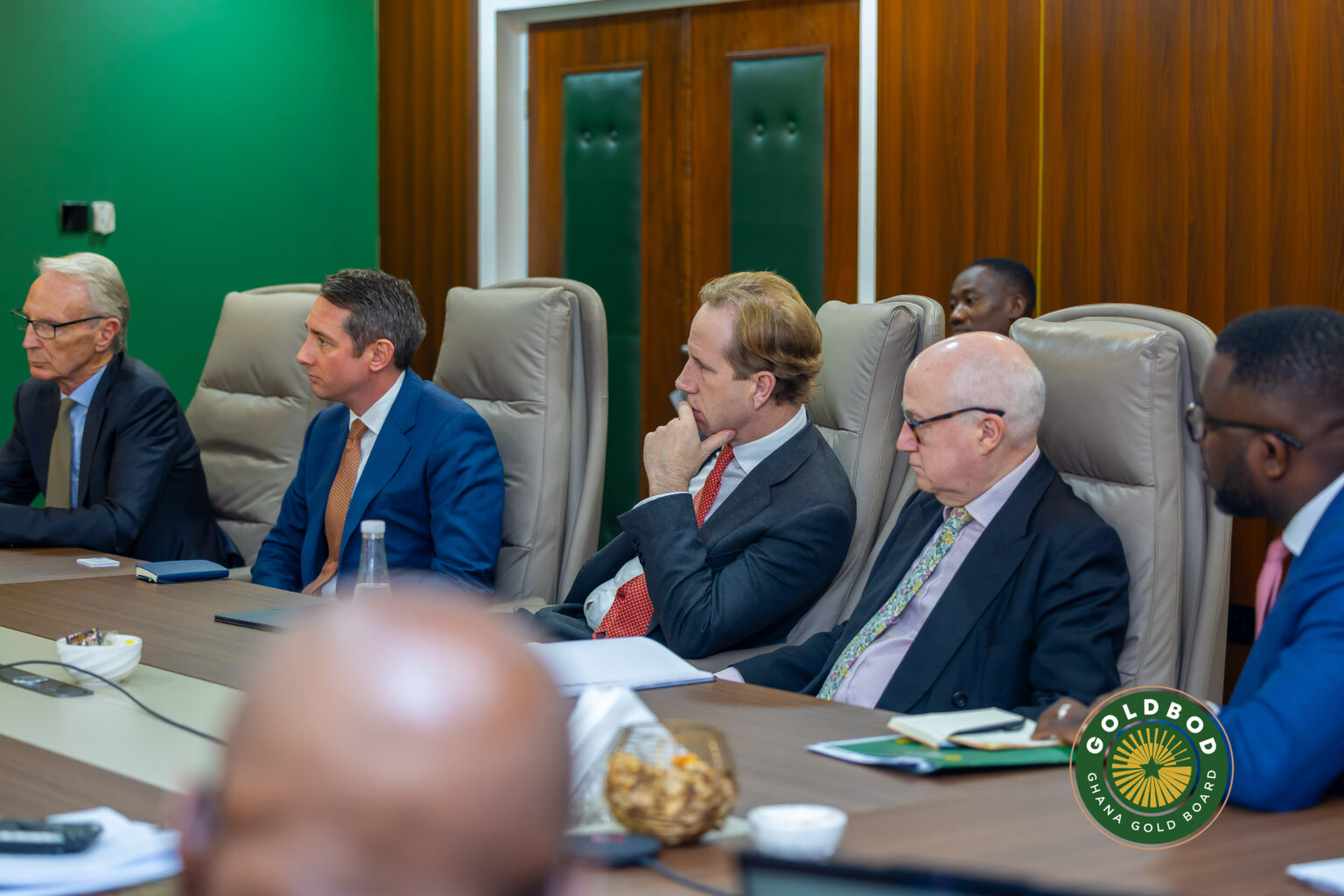
Mr. Tait said that the Council’s global projects include traceability solutions that follow gold from the point of extraction to processing, as well as the building of sustainable processing plants that help mining be done in a responsible way.
GoldBod CEO Sammy Gyamfi, Esq. said that the goals of the World Gold Council are quite similar to those of GoldBod, especially when it comes to cleaning up the ASM industry, stopping illegal money flows, and lowering gold smuggling.
Mr. Gyamfi stated, “By lowering prices and stepping up the fight against smuggling, we have seen ASM gold volumes rise from about 64 tonnes in 2024 to about 103 tonnes last year.”
He said that GoldBod now entirely funds ASM gold purchases through licensed dealers. This means that the trade is subject to strong anti-money laundering and counter-terrorism financing rules. GoldBod also works closely with security services to get rid of criminal activities in the sector.
Mr. Gyamfi also talked about how modern processing plants are needed to fix the damage that informal mining does to the environment and the low recovery rates that come with it.
He went on to say, “If we can have compliant processing plants here, we will reduce environmental damage, optimize recovery, and make sure that the state can quickly mop up gold once it is processed.” GoldBod is ready to work with the World Gold Council on traceability, processing, and formalization projects.
The Chairman of the GoldBod’s Governing Board further said that the Board is still committed to reforms that make the gold value chain more open, inclusive, and valuable.
The Chairman said, “We want traceability and value addition to refined gold, and we want to make sure that everyone in the ASM sector benefits from the business being done.”
The meeting is a big step toward improving cooperation between GoldBod and international stakeholders as Ghana tries to make sure that gold is sourced responsibly, protect the environment, and get the most out of its gold resources for development.
Source: Gold Board