
Increasing Demand and Economic Expansion in India’s Construction Industry by 2025
India’s construction sector continues to serve as the primary catalyst for economic development. With extensive infrastructure development initiatives underway, appropriate apparatus has become essential for ensuring timely completion. Companies currently rely on two primary models for securing financing and leasing apparatus. Both models are suitable for diverse project requirements, financial approaches, and ownership goals. Understanding their differences allows contractors, developers, and builders to select the appropriate approach to optimize cost, flexibility, and long-term benefits.
Funding for Construction Equipment
Financing allows companies to acquire construction equipment through bank loans or Non-Banking Financial Companies (NBFCs). The financiers determine the repayment terms based on interest rates, down payments, and the asset’s value.
Furthermore, financing grants companies full proprietorship of the equipment. This ownership entitles them to claim depreciation and realize tax advantages. It also grants comprehensive authority over the utilization, modification, and subsequent sale of the apparatus. For long-term initiatives, financing frequently proves to be more cost-effective than leasing, since the asset remains under the company’s ownership even after the repayment is completed.
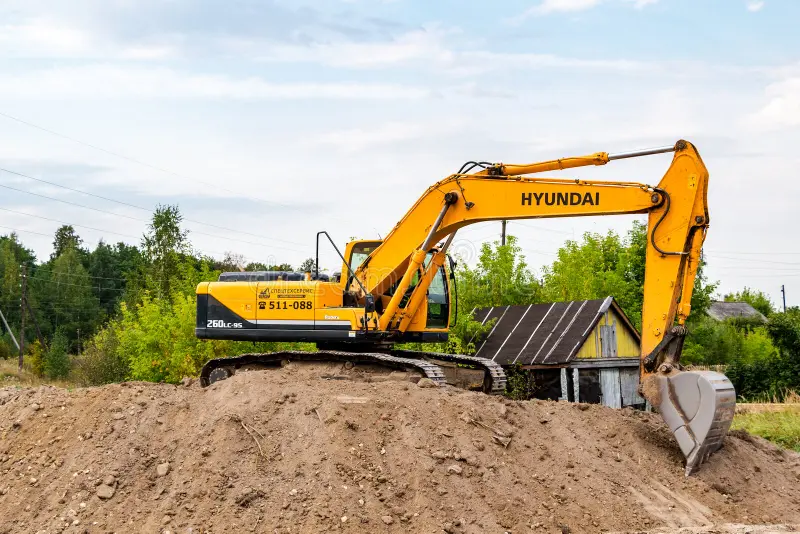
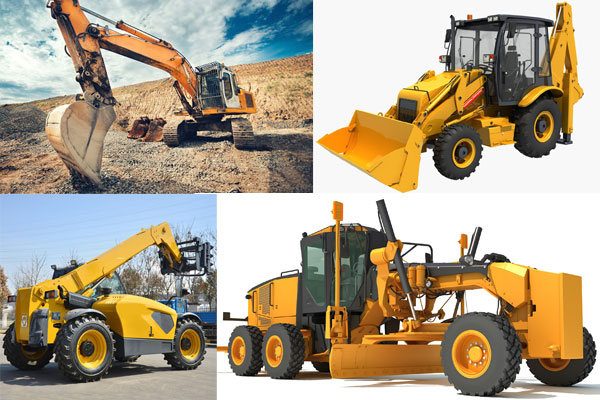
However, financing necessitates a higher initial payment and entails responsibilities including maintenance and insurance. In 2025, the majority of Indian banks provide construction equipment financing at competitive interest rates of 8 to 12%, with repayment periods spanning from three to seven years.
Leasing of Construction Equipment
Leasing, conversely, enables companies to rent equipment for a designated period without acquiring ownership. Organizations may select either operational leases (short-term) or financial leases (long-term) based on their project timeline and ownership considerations.
One of the primary benefits of leasing is that it entails minimal initial capital outlay. The retained capital may be allocated towards other business activities or working capital requirements. Furthermore, the majority of leasing agreements encompass maintenance and servicing provisions, thereby minimizing downtime and enhancing operational efficiency.
Furthermore, leasing provides companies with the flexibility to convert to newer equipment models in accordance with technological advancements. It also facilitates improved cash flow management, as operational leases are typically excluded from the company’s balance sheet, thereby enhancing financial ratios. For smaller-scale initiatives or seasonal requirements, leasing demonstrates greater flexibility and cost efficiency.
Financing Versus Leasing: Which Approach Is Optimal in 2025?
The decision between financing and leasing primarily hinges on the company’s project scope, timeframe, and financial strategy. For enduring infrastructure initiatives, financing continues to be the preferable choice owing to ownership considerations and long-term cost reductions. Nevertheless, for short-term or variable initiatives, leasing alleviates capital constraints and offers greater operational flexibility.
Notably, hybrid models are gaining popularity in 2025. Several Indian banks and NBFCs now provide lease-to-own programs, enabling companies to initially lease equipment with the option to acquire it at a later stage. This method integrates the advantages of flexibility and ownership, rendering it an effective solution for contemporary construction enterprises.
Emerging Developments for 2025
India’s construction financing sector is experiencing several emerging trends. First, non-banking financial companies are broadening their scope by offering specialized construction equipment financing and leasing agreements. Secondly, digital funding platforms are gaining increasing popularity by providing faster approval processes and reduced administrative requirements.
Secondly, tax optimization through financing and leasing is increasingly emerging as a primary concern for the majority of companies today. These frameworks facilitate companies in managing depreciation and allowances more efficiently. Therefore, the global shift towards sustainability is evident, as electric and hybrid construction equipment gain increasing popularity, presenting new opportunities for leasing environmentally friendly machinery.