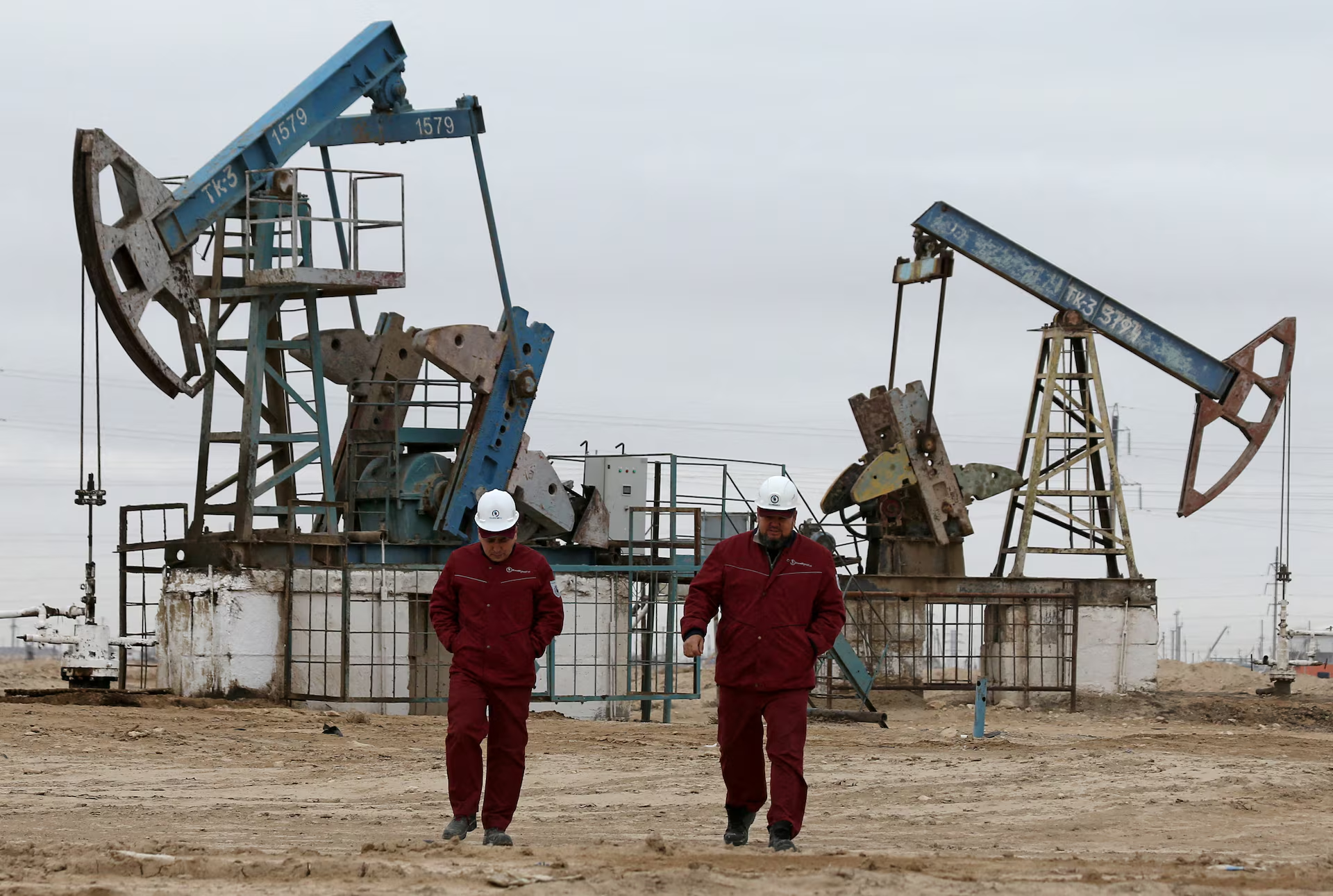

The Trump administration has significantly expanded opportunities for oil and gas investment in Venezuela. In February 2026, the U.S. Department of the Treasury issued a series of general licenses authorizing a wide range of energy sector activities, reversing years of strict sanctions .
📜 A Wave of New Authorizations
The Office of Foreign Assets Control (OFAC) issued five key general licenses in quick succession to implement this new policy. Each license targets a specific aspect of the energy sector :
- January 29, 2026: General License 46 authorized U.S. companies to market and sell Venezuelan-origin oil to buyers worldwide, including in the United States, with payments directed to a U.S.-controlled account .
- February 3, 2026: General License 47 authorized the export of U.S.-origin diluents to Venezuela, a product essential for processing the country’s heavy crude oil .
- February 10, 2026: General License 48 authorized U.S. firms to provide goods, equipment, and services needed to repair and upgrade Venezuela’s oil and gas infrastructure .
- February 13, 2026: General License 49 authorized companies to negotiate and enter into contingent contracts with Venezuela for upstream oil and gas projects, subject to future U.S. government approval .
- February 13, 2026: General License 50 authorized certain firms already in Venezuela to expand their operations, including pursuing additional upstream projects .
⚙️ Key Details and Conditions
While the authorizations are broad, they come with specific conditions and a clear geopolitical context.
- Companies Named: A general license specifically allows Chevron, BP, Eni, Shell, and Repsol to resume and expand oil and gas operations in the country .
- Financial Control: A central feature of the new policy is that payments for royalties and taxes must be made into the U.S.-controlled Foreign Government Deposit Fund to ensure transparency .
- Specific Prohibitions: The authorizations do not permit transactions with companies from Russia, Iran, or China .
- Geopolitical Context: This major policy shift follows the capture of former President Nicolás Maduro by U.S. forces in January 2026 and the establishment of an interim government . U.S. Energy Secretary Chris Wright visited Caracas to finalize what both sides call a “long-term productive partnership” .
- Investment Goals: The Trump administration is seeking $100 billion in investments from energy companies to rebuild Venezuela’s industry. While ExxonMobil and ConocoPhillips have been approached, their CEOs have expressed hesitation, citing past asset seizures and an “uninvestable” climate .
This represents a dramatic shift in U.S. policy, opening Venezuela’s energy sector to significant foreign investment with strict U.S. oversight. Are you interested in the specific opportunities for a particular company or the potential impact on global oil markets?