
On May 13, 2026, Equinox Gold announced an $18.5 billion acquisition of Orla Mining, a merger that creates a new North American senior gold producer with an expected annual output of 1.1 million ounces and a clear path to over 1.9 million ounces. While significant for the new entity, the deal’s broader implications for the gold industry are nuanced and likely limited in the near term.
🏗️ Deal Structure: A Simple Share Swap
The transaction is structured as a straightforward share exchange:
- Orla shareholders will receive 1 Equinox share plus a nominal $0.0001 in cash for each of their shares.
- Post-deal, existing Equinox shareholders will own about 67% of the new company, and former Orla shareholders will hold roughly 33%.
- The merger retains Equinox’s leadership: CEO Darren Hall remains, with Orla’s CEO Jason Simpson becoming President.
📈 Strategic Rationale: Scale and Diversification
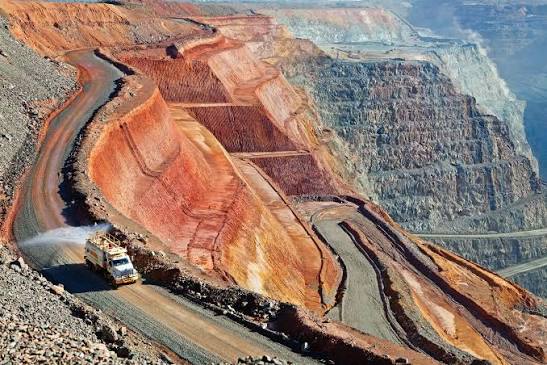
From a strategic standpoint, the move aligns with broader industry trends. It’s primarily about achieving greater scale and diversification, with expected near-term production of 1.1 million ounces from six mines across Canada, the US, Mexico, and Nicaragua.
- Scale is the Key Advantage: The primary driver is achieving critical mass. The combination is expected to produce a projected US$1.4 billion in free cash flow in 2026, underpinned by a significant reserve base of ~23 million ounces. This scale moves Equinox into the top tier of North American producers and provides the financial firepower for large-scale organic growth, reducing reliance on continuous external acquisitions.
💡 What It Means for the Gold Industry
- A Vote of Confidence for the Americas: The deal underscores a persistent industry bias toward mining in politically stable, “safer” jurisdictions, reinforcing the Americas as a core strategic region for gold production. It de-risks the portfolio by avoiding exposure to more volatile mining jurisdictions globally.
- One Deal, Not a Mega-Merger Wave: The transaction appears to be more of a balance sheet consolidation between two complementary entities rather than an aggressive takeover. This suggests it may not ignite a cascade of large-scale M&A, but it could pressure other mid-tier producers to seek similar efficiency through strategic reviews or partnerships.
- Impact on Industry Pricing Power is Minimal: The new Equinox, with a ~1.1 million ounce output, is still a relatively small player in the global gold market (annual production ~3,000 tonnes). Therefore, the deal is unlikely to materially impact gold prices or give the new entity outsized pricing power.
🚧 Potential Risks and Headwinds
While the financial logic is sound, potential risks could temper the deal’s long-term impact:
- Integration Execution: The success of the deal depends on the successful integration of two distinct corporate cultures, operating teams, and asset portfolios. Achieving the projected synergies is a complex, multi-year task.
- Regulatory Hurdles: While regulatory approval in Canada and the US seems probable, the process could lead to unexpected conditions or delays that create uncertainty. The deal requires approval by 66⅔% of Orla shareholders and a simple majority of Equinox shareholders at meetings expected in July 2026.
- Market Volatility: The “price” of the deal will fluctuate with Equinox’s stock price until it closes in Q3 2026, making it vulnerable to shifts in market conditions and broader market risk.
🔑 Key Takeaways
Overall, the Equinox-Orla merger is a clear case of strategic consolidation in a favored mining region to achieve the operational and financial benefits of scale. Its direct disruptive force on the broader gold industry is likely limited in the near term, but it does serve as a noteworthy benchmark for how successful mid-tier miners are positioning themselves for the next chapter of the gold market.
If you’d like to explore any aspect of this deal in more detail—such as the specific assets involved or the broader M&A landscape—feel free to ask.