
Ghana’s water well borehole drilling market is a vibrant industry driven by the demands of a developing economy, agricultural irrigation, and the vital requirement for water security. Although comprehensive market data particular to Ghana is harder to come by, major government initiatives and worldwide industry trends are influencing its growth. Market research publications from companies such as 6W Research provide the most thorough industry reports. In September 2025, their most recent study on the “Ghana Water Well Drilling Market” was updated, with information and projections through 2031.
📈 Market Synopsis
Segmentation: The market is mainly divided into two categories: residential, irrigation, and institutional, as well as drilling methods such cable tool, auger, and rotary drilling.
Price Range: The depth and complexity of a borehole might affect its cost. To put things in perspective, local drilling businesses charge between GH₵ 8,500 for simple drilling and GH₵ 14,000 for a complete installation. The cost of each borehole is estimated to be roughly GH₵ 15,000 in tender documents for community initiatives.
Important Motivators
Ghana’s need for borehole drilling is being driven by a number of factors:
Water Scarcity & Reliability: Groundwater offers a more predictable and secure source of water in the face of climate change and erratic surface water.
Government and International Initiatives: Through strategic alliances, the Ghanaian government is actively working to increase water availability. In order to transition from trial-and-error drilling to data-driven planning, the Ministry of Works, Housing and Water Resources and the SEDA Africa Group have partnered to map groundwater resources using technology. Additionally, district assemblies consistently submit tenders for mechanization and borehole drilling projects.
Regulatory Compliance: Regulations L.I. 1827 (2006), which require that all borehole drilling be done by licensed professionals, are being rigorously enforced by the Water Resources Commission (WRC). By prohibiting unlicensed operations and ensuring sustainable groundwater usage, this rule encourages businesses to choose compliant businesses.
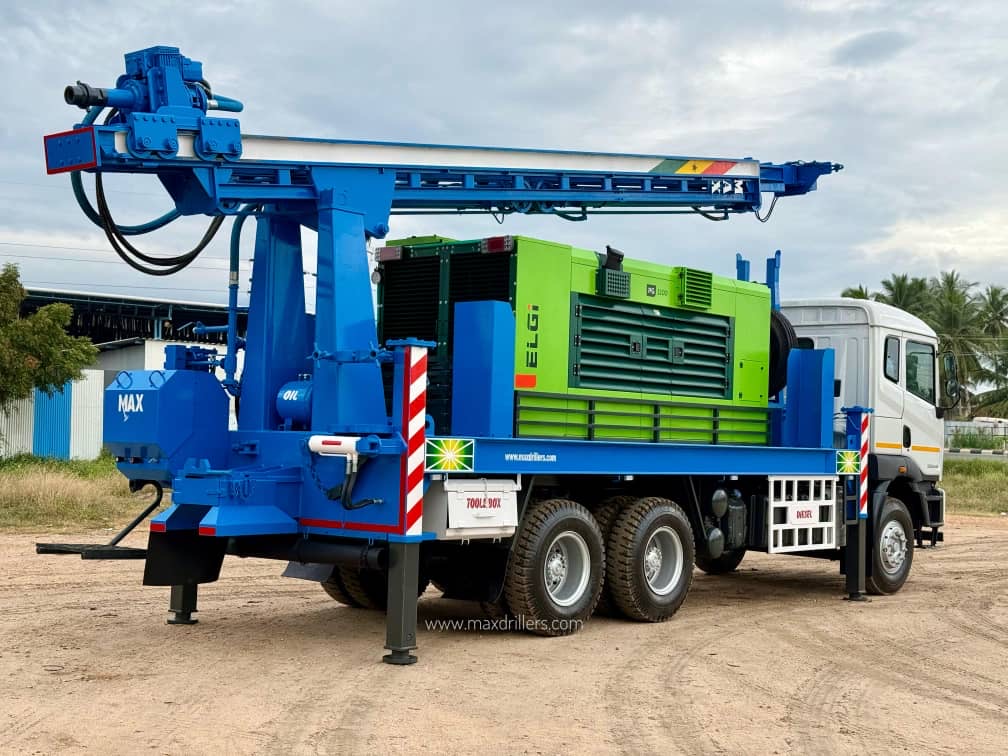
Important Players
The market is made up of both well-known Ghanaian businesses and foreign enterprises that provide specialized services.
Axis Borehole is a groundwater development firm that provides a wide range of services for residential, commercial, and community projects, including mechanization and geophysical surveys.
Geodrill is a global leader in exploration drilling that operates in Ghana and offers major mining corporations a range of services, including water borehole drilling.
Dekomark Borehole Drilling is a nationwide water borehole company that provides a wide range of services, including hydrogeological surveys, repairs, and water purification.
PAMICOR Limited is a well-known Ghanaian business that was created in 1993 and specializes in a range of drilling services, such as geotechnical investigations and borehole drilling.
Fordak Technology Limited is an entirely Ghanaian business that specializes in geotechnical site assessments, hydrogeological investigations, and drilling.
💪 Market Difficulties
The market is growing, but it still confronts a number of obstacles:
Data-Driven Planning: The industry has historically depended on disjointed, trial-and-error techniques, which has resulted in a high failure rate (almost half of certain boreholes have been decommissioned). This emphasizes the urgent need for improved data.
Regulatory Enforcement: Despite the existence of the legal framework (L.I. 1827), the WRC continues to work to ensure that all players are licensed and compliant. There were about 200 licensed and registered water drilling businesses in the nation in 2022.
Financial Restraints: Public-private partnerships are crucial for expanding water infrastructure because the government cannot address limited infrastructure, climatic shocks, and financial shortages on its own.
A synopsis
Ghana’s water well borehole drilling market is a crucial and expanding sector, bolstered by robust regulatory frameworks and substantial government interest in enhancing water availability. However, it encounters difficulties with financial resources and data-driven planning. It is highly advised to check specialized market research reports for the most precise, up-to-date, and comprehensive market data.