
According to lawyer Kobby Amoah, the management of the Adamus Resources mining lease may deter investment in Ghana’s mining sector if investors believe regulatory agencies can disregard established procedures.
Amoah stated that the concern was especially noteworthy because Adamus is one of the few locally owned companies working in Ghana’s large-scale mining sector.
“We need to protect our indigenous entities, our indigenous companies in a sector like mining and oil and gas, where most of our resources are taken up by foreign entities,” he remarked on Wednesday’s Asaase Breakfast Show (12 August).
He contended that locally owned mining enterprises play a vital role in retaining profits and investment in Ghana and should thus not be subjected to arbitrary regulatory actions.
Amoah stated that the government has the authority to oversee mining operations and penalize violations, but that the law required the authorities to follow due process before inflicting the most severe fines.
He cautioned that any perceived failure to follow those rules could have ramifications beyond the Adamus case.
“Once the authorization is seen at the jurisdiction that does not follow its own laws, that does not follow its own procedure, it becomes difficult for any investor to come into the country,” he stated.
According to Amoah, before committing capital to a jurisdiction, investors perform risk assessments, which include assessments of regulatory and legal certainty.
He stated that concern about whether established procedures would be followed could impede Ghana’s capacity to attract investment in capital-intensive industries such as mining.
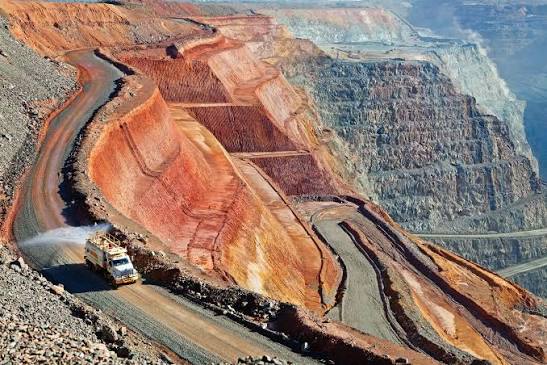
“Mining is a serious business.” “There is a significant amount of investment required,” he remarked.
Amoah admitted that Adamus’ local ownership did not grant the company a legal exemption from regulatory responsibilities.
“Legally, no,” he answered when asked if the company’s status as a Ghanaian-owned corporation affected the minister’s decision.
However, he emphasized that mining policy should take into account Ghana’s broader economic objectives, as well as the government’s stated goal of promoting local participation in mineral resource extraction.
He stated that the ability of indigenous enterprises to raise the finance required for large-scale mining made it critical to avoid governmental policies that could inhibit local involvement.
“Raising the needed capital to involve in such ventures is extremely difficult,” Amoah stated.
He contended that if an indigenous firm had successfully obtained the financial and technical capacity to run a large-scale mining license, regulatory authorities should ensure that any punishments imposed on it strictly adhered to the law.
Amoah also dismissed the government’s claim that the claimed infractions automatically merited revocation.
He stated that the government had alternative legal options to pursue matters such as unpaid taxes, royalties, or other financial commitments.
“Many allegations are not enough,” he stated, asking that allegations be tested in accordance with legal procedures.
In its lawsuit against Adamus, the government claimed suspected unauthorized assignment of mineral rights, mining beyond designated regions, environmental and forestry infractions, and unpaid financial commitments.
Amoah stated that if the charges are proven, regulatory action may be warranted, but that the corporation must first be given a fair opportunity to respond and address violations as permitted by law.
He stated that the handling of the issue has become a broader test of Ghana’s regulatory integrity and commitment to fostering indigenous participation in the mining sector.