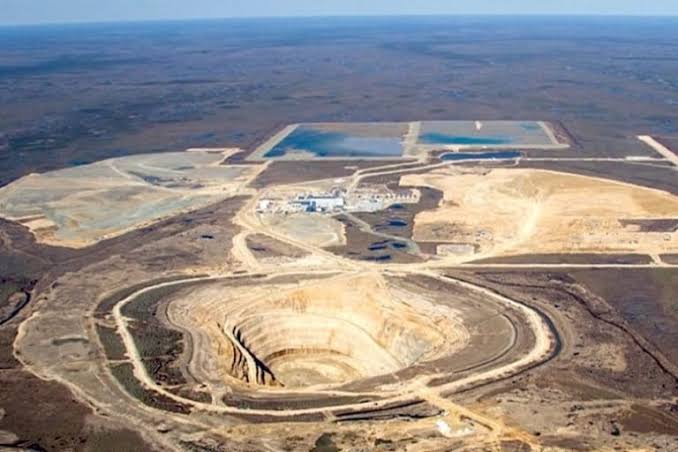

Australia’s $28 billion investment in key minerals is intended to strengthen the country’s domestic processing capacity and minimize dependency on concentrated overseas markets.
Speaking at the Australian National University’s National Security College, Federal Resources Minister Madeleine King emphasised Australia’s responsibility to lead the way in developing resilient critical minerals supply chains in the face of rising geopolitical tensions and export restrictions.
King stated that Australia had committed one of the world’s largest financial support packages to the sector, with a $28 billion investment aimed at rebuilding local processing and refining capacity.
“Australia’s response has been to commit the nation to developing a critical minerals and rare earths industry that captures more value and builds sovereign capability and an enduring position as a world leader,” King stated.
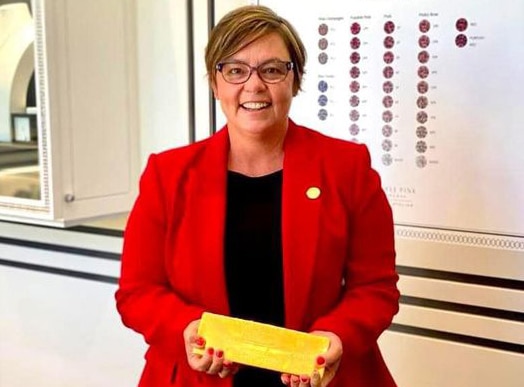
“If Australia wants to capture more value, it needs to move down the value chain. The value and leverage are in the processing and refining – and increasingly in the systems, data, and technology that surround them.”
King also emphasized Australia’s rising international involvement, citing its participation in the extended G7 Critical Minerals Production Alliance, as well as collaborations with the United States, Japan, and Canada to build diverse supply chains.
Several projects are supporting the government’s strategy, according to King, including Victory Metals’ rare earths pilot processing facility in Perth, the gallium production facility at Alcoa’s Wagerup alumina refinery in Western Australia, and the recently funded Arafura Nolans Rare Earths Project near Alice Springs.
According to King, the Wagerup gallium facility is planned to generate roughly 100 tonnes per year, which accounts for around 10% of world demand and would assist resolve supply interruptions caused by China’s gallium export limitations, which went into effect in 2023.
King stated that Australia was collaborating with international partners to develop new sovereign capabilities in response to market shifts.
“We need to help shape the next generation of critical minerals markets and the trading systems that support them,” King stated.
According to King, while Australia cannot compete in every mineral or processing stage, strategic investment and international relationships are critical to developing robust supply chains and securing Australia’s long-term economic and national security objectives.
“Our task is to be deliberate about where we invest, where we partner, and how we position ourselves in a system that is increasingly contested,” King stated.
“Ultimately, it’s not just about resources. It is about how governments manage reliance and resilience in an increasingly uncertain environment. Critical minerals and rare earths are at the heart of that dilemma.”