
Beyond the typical rental checklist, renting heavy equipment in West Africa has a special combination of opportunities and challenges. You must consider every aspect from a local perspective due to the region’s rapid infrastructure development, unpredictable logistics, extreme weather, and local regulatory frameworks. The most important factors to make your project safe, on schedule, and under budget are listed below.
- Infrastructure for Local Dealer Support and Services The quality and proximity of the supplier’s in-country support are the most important consideration.
On-site repair capability: Is it possible for the rental firm to send a mechanic to your remote location in a matter of hours rather than days?
Workshop facilities: Will a broken machine need to be transferred to another nation, or are they equipped for significant repairs?
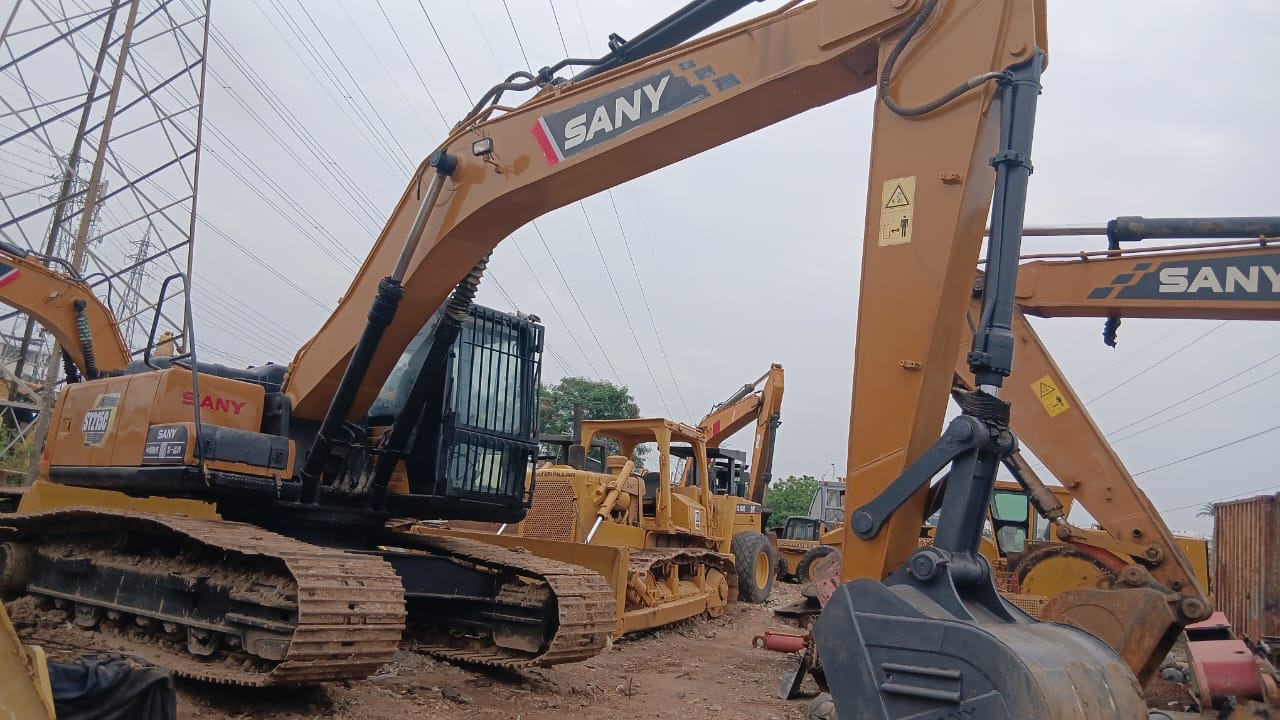
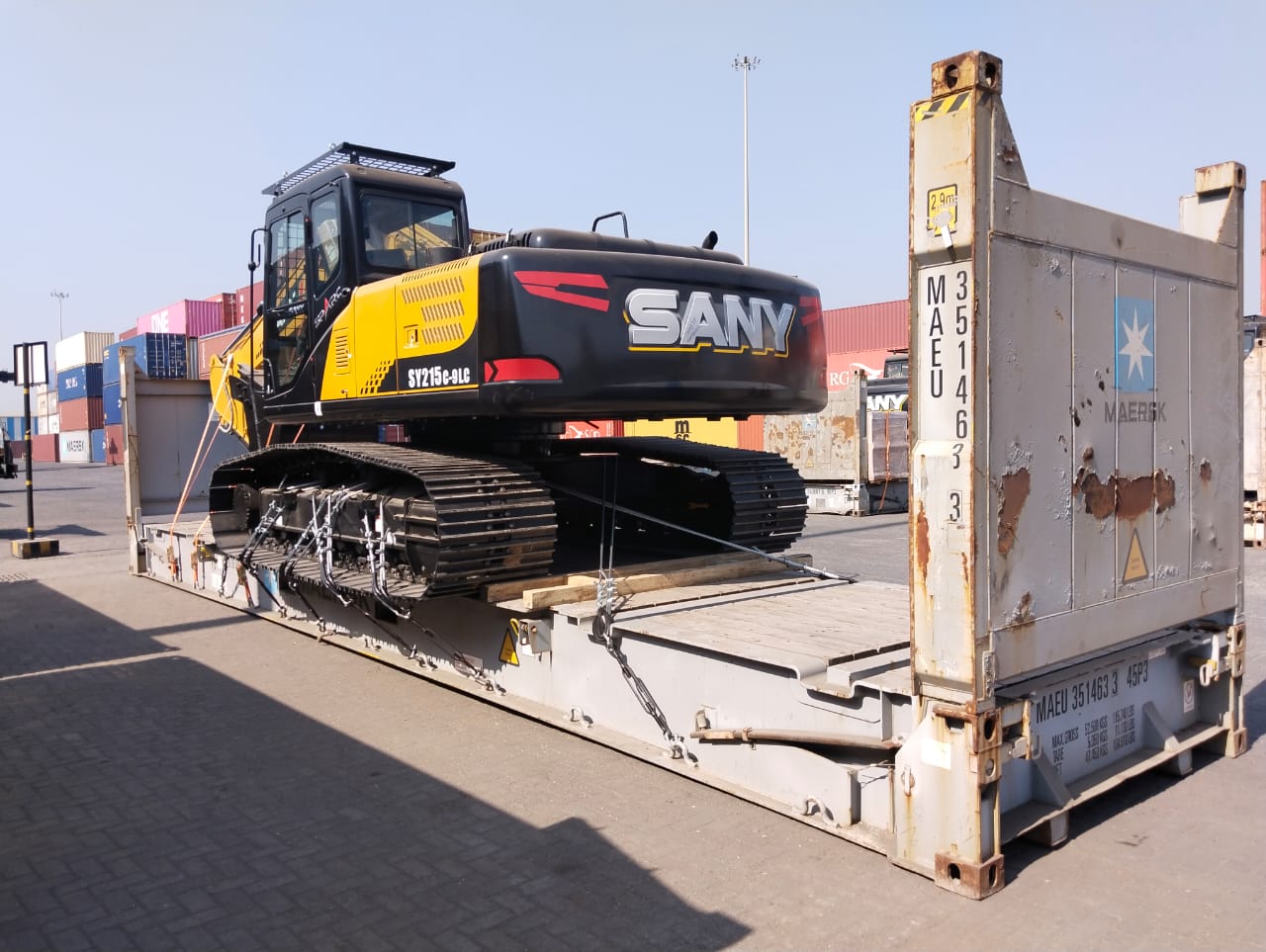
Relationship with OEMs: Dealers that have been approved by major brands, such as Caterpillar, Komatsu, Volvo, SANY, and XCMG, frequently have easier access to software updates, diagnostic tools, and original parts.
Local presence: You can significantly cut downtime by working with a provider that has branches around your nation, such as in Lagos, Accra, or Abidjan.
- Climate and Terrain Appropriateness of Equipment In West Africa, the environment can destroy unsuited machinery.
Dust and sand: If working in the Sahel or during Harmattan, look for heavy-duty air filtration equipment (cyclone pre-cleaners and high-efficiency filters).
High humidity and precipitation: Coastal regions, such as Ghana, the Ivory Coast, and Nigeria’s Delta, require sealed electrical systems, corrosion-resistant parts, and properly lubricated undercarriages to prevent rust.
Terrain type: Whether you’re in muddy terrain, loose sand, or laterite roads will determine whether you should go wheeled or tracked. Swampy areas may require low-ground-pressure (LGP) equipment.
Cooling systems: In addition to fine dust, radiators and cooling packs must be able to withstand ambient temperatures that frequently surpass 38°C.
- Transportation & Logistics In West Africa, moving large machinery is rarely simple.
Permits and escorts: State-by-state permits and police or military escorts are often necessary for oversized shipments, particularly in Nigeria. Take official fees and time into account.
Road conditions: There may be shaky bridges, load-restricted routes, or an unsurfaced “last mile” to your location. On laterite rails, a lowboy trailer meant for paved roads can break down.
Port clearance: Be ready for delays in customs and demurrage if you are temporarily importing equipment. It is crucial to have a local representative who is knowledgeable in temporary importation (carnets, duty waivers).
Mobilization time: You shouldn’t expect a machine in Accra to be in Kumasi the following day. Check the availability of trailers and make sure the journey times are reasonable.
- Fuel Supply & Quality Bad fuel is a major source of downtime, and fuel quality varies significantly throughout the region.
Risk of contamination: Diesel may contain a lot of water, silt, or sulfur. Strong on-site filtration systems (water separators, additional fuel filters) and stringent fuel management procedures are required.
Reliability of supply: Obtaining 500 liters of diesel per day in isolated or unsafe locations necessitates a specialized supply chain and safe storage. Ask the rental provider if fuel is included or if you have to find it on your own.
Adulteration: Look for indications of combining kerosene, which can ruin injection systems. If the breakdown was caused by gasoline quality, some rental contracts would negate warranty coverage; be sure to understand this.
- Operator Training and Skill: The machine is only as good as the person using it.
Local operator competency: Although there are several outstanding operators in the area, standards differ. You can avoid catastrophic misuse by using a rental provider that has certified, trained workers.
Machine-specific training: Operators accustomed to earlier models may become confused by newer Tier 3/Tier 4 emission-controlled engines or sophisticated telematics. Make sure the vendor offers familiarization on-site.
Language barriers: The English and French warning labels and instruction manuals must correspond with the literacy level of your staff. Demand French-speaking instructors and documentation in Francophone nations.
- Site Conditions & Security In certain regions, equipment is a high-value target.
GPS tracking, immobilizers, and safe on-site parking (guarded complexes) are non-negotiable measures against theft and damage. Check to see if theft is covered by the rental and what exclusions apply (such as if there were no guards).
Requirements for insurance: Comprehensive insurance will be specified in the rental agreement. Verify whether it covers terrorism, civil disturbance, or political instability—all of which are pertinent in some areas of the Niger Delta or Sahel.
Remote site safety: You need to have emergency extraction plans for operators and mechanics as well as logistical support if your project is located in an unsafe area.
- Availability of Spare Parts and Management of Downtime If components aren’t accessible locally, a broken hose in a remote area of Ghana or Mali may put your project on hold for weeks.
Wear parts on site: Make sure that common consumables (such as filters, belts, hoses, teeth, and cutting edges) are either available from the dealer within a day or are stored on-site by you.
Fleet commonality: Parts and troubleshooting might be streamlined by renting several machines of the same brand and model.
Downtime clauses: If a breakdown occurs after a predetermined repair window (such as 48 hours), negotiate fines or a guarantee for a replacement unit.
- Contract Terms, Liability, and Insurance Anglophone and Francophone nations, as well as ECOWAS member states, have different legal systems.
Third-party vs. comprehensive: Your contract should specify who is responsible for theft, damage, and harm to third parties.
Damage waiver (LDW/CDW): Recognize what is covered, the excess, and the exclusions, such as tires, glass, or undercarriage damage. Undercarriage wear might speed up during damp seasons.
Temporary import bonds: Verify who is in charge of re-export guarantees and temporary import bond charges if the equipment is arriving from outside the nation. If the paperwork is not proper, Customs may impound the machinery.
- Currency Exposure & Cost Transparency Significant additional expenses may be concealed by seemingly low daily charges.
Included: Make it clear whether the pricing includes insurance, government permits, gasoline, regular maintenance, operator compensation, and transportation to the location.
Currency: Although rates are provided in USD or EUR in many West African economies, the local currency (such as the Naira, Cedi, or CFA) may change. The lessor is protected by a hard currency rental agreement, but you might see significant fluctuations in exchange rates. If at all possible, negotiate fixed-local-currency provisions or a stable exchange rate.
Minimum hire periods: Early termination costs can be high, and some companies require a minimum 3-month rental. Match the parameters of the contract to the stages of your project.
- Adherence to Environmental Standards and Local Regulations Shutdowns or fines may result from breaking local regulations.
Work permits and visas: Appropriate ECOWAS/immigration clearance is required for operators or technicians brought in from overseas.
Environmental discharge: Fuel spills, hydraulic oil leaks, and inappropriate waste oil disposal are becoming more regulated and can lead to conflict in the community.
Noise and vibration: Heavy machinery activity may be subject to curfews in urban areas (such as central Accra and Lagos).
- Communication & Relationships In West Africa, long-term partnerships and trust are the foundation of business.
Verify references: Don’t rely solely on glossy brochures; get local project references. Go to a location where the same supplier’s equipment is in use.
Dedicated account manager: Make sure you have a single point of contact in Dubai or Europe who knows your language and has the power to resolve issues without the need for head office approvals.
Flexibility: A provider is worth a premium if they can adjust to changing project schedules, unforeseen soil conditions, or unexpected demands for additional equipment.
A Condensed Checklist for Your Project in West Africa Dealer repair center at a reasonable response time
Dust, heat, humidity, and terrain-specific equipment
Transport routes are examined, and escorts and permissions are planned.
Safe fuel supply with on-site filtration
Language alignment and operator certification
Comprehensive insurance, physical security, and GPS tracking
Critical spare parts that are on-site or locally accessible
Clearly stated backup equipment and downtime
Currency protection and an open cost structure
Complete adherence to environmental regulations and local laws
You can transform heavy equipment leasing from a possible bottleneck into a dependable, scalable resource for your West African project by emphasizing on-the-ground support, machine robustness, and watertight contracts that fit the local environment.