
India Heavy Equipment Market Report (2025–2026) India’s heavy equipment industry, while facing short-term domestic demand headwinds, is on a robust long-term growth trajectory driven by massive infrastructure investment and a rapidly expanding export sector.
- Market Overview The Indian heavy construction equipment market has established itself as the world’s third-largest, with total sales volume in FY2025–26 reaching approximately 136,995 units—a marginal decline of around 2% from the previous fiscal year. Despite this slight dip, the industry maintains a strong underlying momentum, supported by sustained government capital expenditure, deep domestic manufacturing capabilities, and growing global acceptance of Indian-made equipment.
Over 95% of equipment sold in India is manufactured domestically, underscoring the sector’s self-reliance. The government is actively working to strengthen this further with a proposed ₹16,000 crore incentive program aimed at boosting domestic manufacturing of critical machinery like tunnel boring machines and heavy-duty earthmoving equipment.
- Market Size & Forecast The market presents a clear picture of short-term consolidation followed by strong long-term expansion:
Metric Value Source Market Size (2025) USD 15.37 Billion IMARC Group Forecast Market Size (2034) USD 29.50 Billion IMARC Group CAGR (2026–2034) 7.52% IMARC Group Market Size (2024) USD 3.31 Billion (approx. US$3,313.76 Million) Market Research Future Forecast Market Size (2035) USD 7.04 Billion (approx. US$7,035 Million) Market Research Future CAGR (2025–2035) 7.08% Market Research Future The IMARC Group report projects growth from USD 15.37 billion in 2025 to USD 29.50 billion by 2034, maintaining a historical CAGR of around 7.5%. The sector is expected to expand from its current size of approximately 10 𝑏 𝑖 𝑙 𝑙 𝑖 𝑜 𝑛 𝑡 𝑜 10billionto14.76 billion by 2030, at a CAGR of 8.3%.
- Recent Performance: FY2025–26 The domestic construction equipment industry recorded total sales of 1,36,995 units in FY2025–26, compared to 1,40,191 units in FY25—a 2% decline. Ministry of Heavy Industries data indicates total industry sales of 1,40,191 units, reflecting a 3% increase over the previous year.
Domestic vs. Export Split:
Category FY25 FY26 Change Domestic Sales 1,21,301 units 1,13,229 units ↓7% Exports ~12,890 units 16,885 units ↑31.5% Total Sales 1,40,191 units 1,36,995 units ↓2% Domestic demand fell by approximately 7% due to slower infrastructure execution, project delays, and cautious buying sentiment. In contrast, exports surged 31.5% year-on-year, driven by demand from Africa, Southeast Asia, the Middle East, and Latin America—reflecting the growing global competitiveness of Indian-manufactured construction equipment.
Domestic sales accounted for nearly 90% of total construction equipment volume in FY25.
- Key Growth Drivers & Government Initiatives The industry’s medium-to-long-term growth is anchored on several structural drivers:
Infrastructure Investment The government allocated ₹11.2 lakh crore ($133 billion) for capital expenditure in FY2025–26. Flagship schemes continue to drive demand:
Initiative Impact National Infrastructure Pipeline (NIP) Provides long-term visibility for equipment demand PM Gati Shakti Integrates infrastructure planning across ministries Bharatmala Pariyojana Targets highway expansion of ~10,000 km in 2026 Smart Cities Mission Drives demand for urban construction equipment Jal Jeevan Mission (JJM) Supports rural water infrastructure projects Policy Support & Manufacturing Incentives Production Linked Incentive (PLI) Framework: A proposed ₹16,000 crore incentive program aims to boost domestic manufacturing of tunnel boring machines, cranes, concrete equipment, and heavy-duty earthmoving technology.
CEV Stage-V Emission Norms: Implemented from January 2025, these norms align domestic equipment with international standards, opening new export markets in Europe, North America, and Japan while raising product costs by 12–15%.
Export Competitiveness The 31.5% export surge in FY26 was driven by demand from Africa, Latin America, Southeast Asia, and the Middle East. The transition to CEV Stage-V emission norms has further enhanced product acceptability in advanced markets.
- Market Segmentation By Equipment Type (FY26) Segment Sales (Units) Share YoY Change Earthmoving Equipment 97,236 ~71% -2% Material Handling Equipment 15,290 ~11% -10% Concrete Equipment 14,486 ~11% +0.09% Road Construction Equipment 7,445 ~5% +6.3% Material Processing Equipment 2,538 ~2% +1.2% Earthmoving equipment continues to dominate, driven by demand for excavation and land-moving machinery across infrastructure projects. Road construction equipment posted the strongest growth at 6.3%.
By Solution Type (2025) Products: ~69% share, driven by direct equipment purchases by large contractors and government agencies

Services: ~31% share, gaining traction through fleet management and maintenance-as-a-service models
By Equipment Weight Class Heavy Construction Equipment: 64% revenue share, driven by scale requirements of highway and metro projects
Light/Compact Equipment: Growing share due to urban infrastructure and real estate projects
By Region (2025) North India: 30.0% revenue share (largest market), driven by Delhi-NCR real estate, NHAI highway projects, and industrial corridor development
West & Central India: 26.4% share (fastest-growing region)
South India: 24.8% share, supported by IT corridor construction and port expansion projects
- End-User Industries Construction equipment demand is distributed across key sectors:
Roads: 40%
Mining: 25%
Real Estate: 15%
Other Sectors (Railways, Water Supply, Power): 20%
- Competitive Landscape The Indian construction equipment market features a mix of global majors and established domestic players. According to FADA data for CY2025, JCB India led the market with 34,833 units sold (47% market share), supported by its dominance in the backhoe loader segment, despite a 13.7% year-on-year decline.
Key Companies:
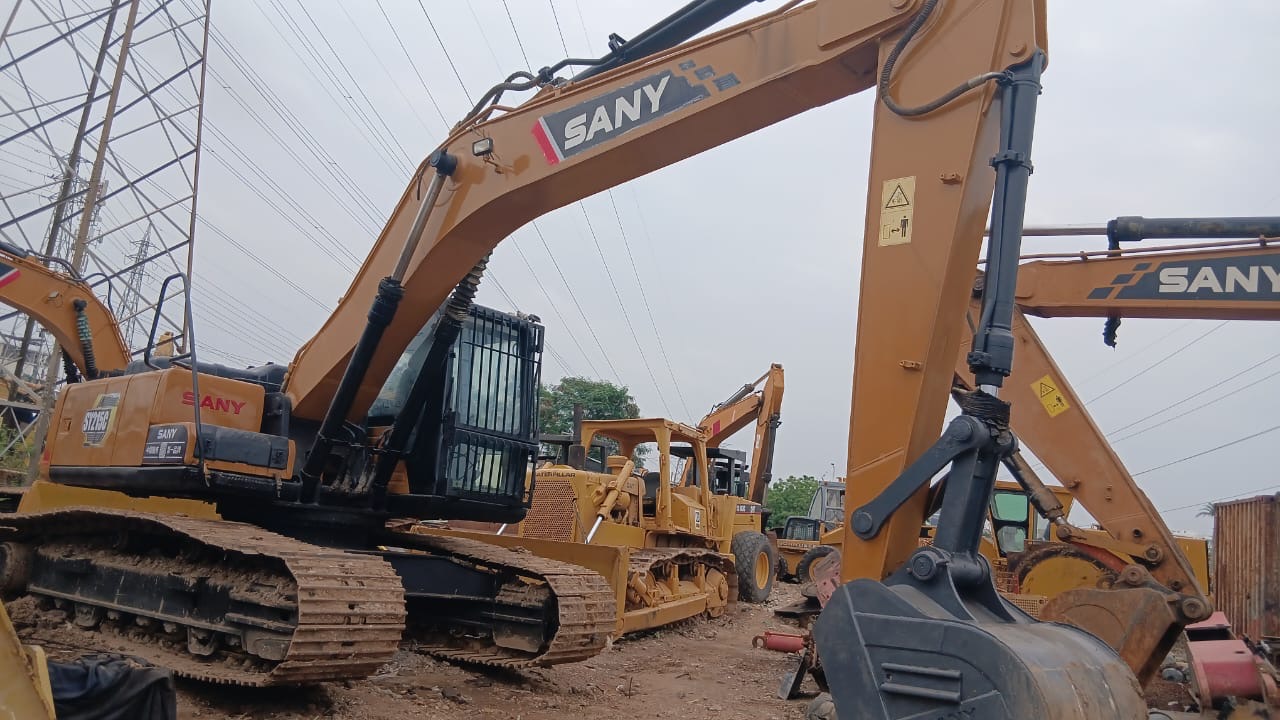
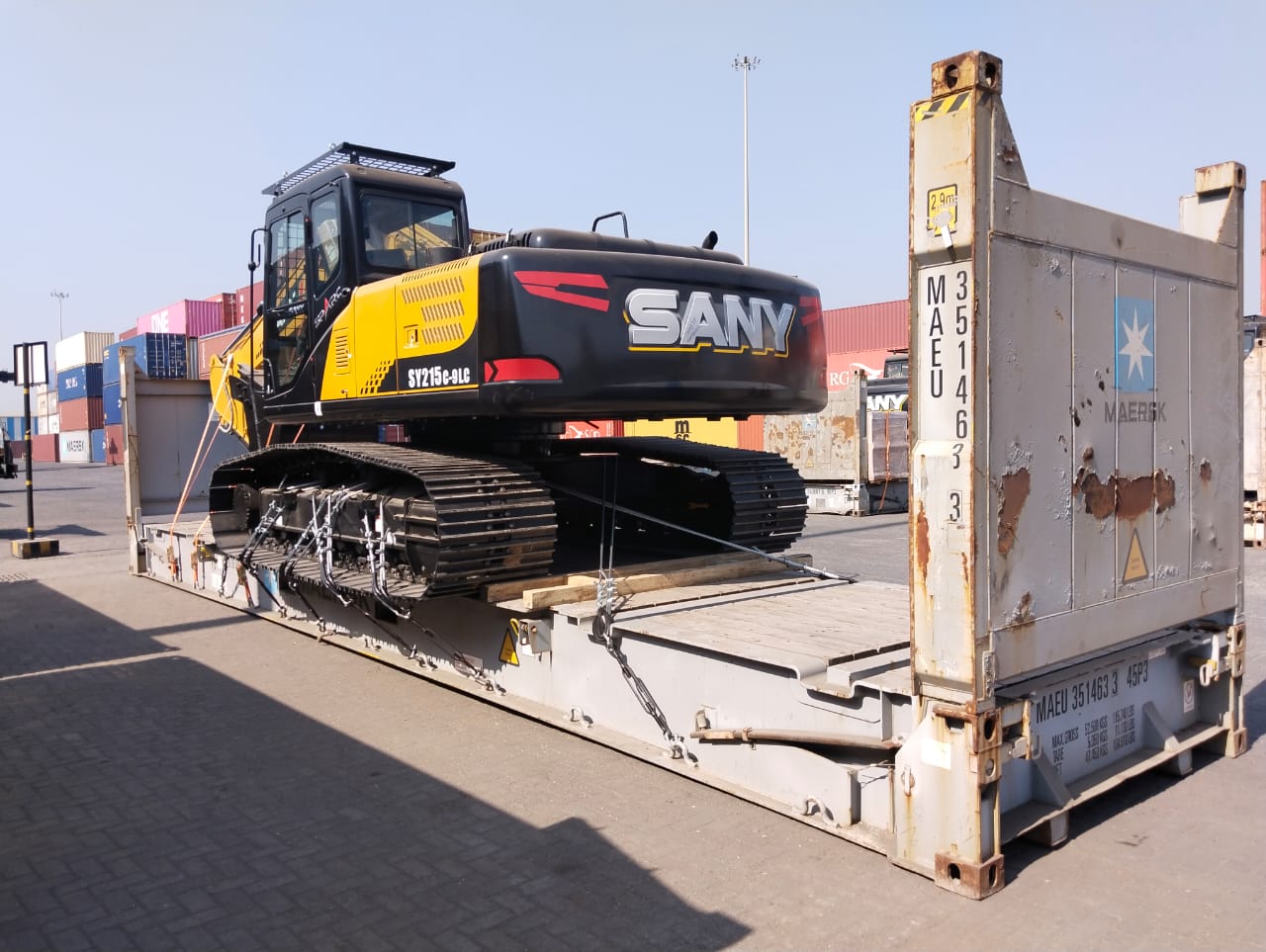
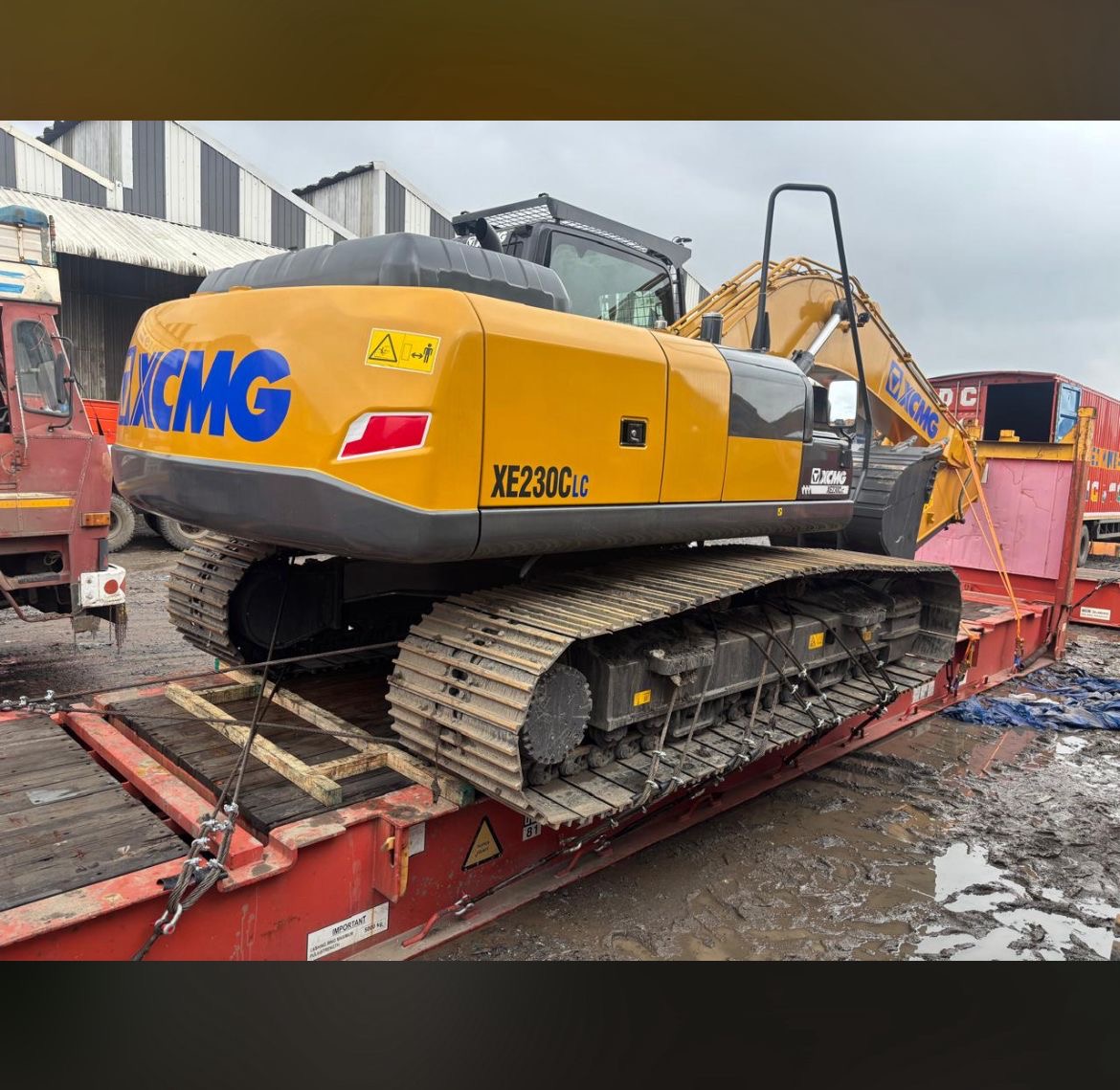
Company Notable Strengths JCB (UK) Dominant market leader with ~47% share, strong backhoe loader presence Caterpillar Inc. (US) Global heavy machinery leader with robust distribution network Komatsu Ltd. (Japan) Technology-driven solutions, focus on sustainable practices Volvo Construction Equipment (Sweden) High-quality, fuel-efficient equipment Tata Hitachi Construction Machinery Joint venture with strong local market understanding Action Construction Equipment (ACE) Leading Indian material handling and crane manufacturer SANY / XCMG (China) Growing presence with competitive pricing Other notable players include Liebherr (Germany), Kobelco (Japan), and CNH Industrial. Ajax Engineering defied the industry downturn with 8.1% growth in CY2025, driven by steady demand for concrete batching equipment.
- Challenges & Headwinds Domestic Demand Softening: Domestic sales declined by 7% in FY26, driven by muted new project awards, a slowdown in road construction (road completion dropped to ~1,900 km in H1 FY26 from ~3,700 km in H1 FY25), and moderating real estate activity.
Regulatory Cost Pressure: The transition to CEV Stage-V emission norms from January 2025 increased equipment prices by 12–15%, which manufacturers are gradually passing on to customers.
Project Execution Challenges: Delayed infrastructure project awards, land acquisition issues, slower Jal Jeevan Mission implementation, and contractor payment delays have all weighed on domestic demand.
Monsoon Disruptions: An early onset of monsoons and unseasonal rains in Q1 FY2026 disrupted construction and mining activities.
Input Cost Inflation: Safeguard duty on flat steel products (announced in April 2025) and compliance-related cost hikes are expected to impact OEM margins.
- Outlook & Forecast Agency Volume Growth Forecast (FY26) Outlook ICRA 2–5% (1.43–1.47 lakh units) Recovery expected in H2 driven by government capex Crisil Ratings 2–4% (~1.45 lakh units) for FY26–27 Moderate growth amid subdued domestic demand ICEMA Domestic growth ~7% in FY27; exports at least +20% Optimistic on recovery ICRA expects the sector to grow 2–5% in FY2026, though Q1 FY2026 saw a 1% overall decline with domestic volumes falling 4%. Crisil Ratings projects a 2–4% volume growth for FY26 and FY27. Revenue is projected to rise 6–8% in both years, supported by selective price hikes.