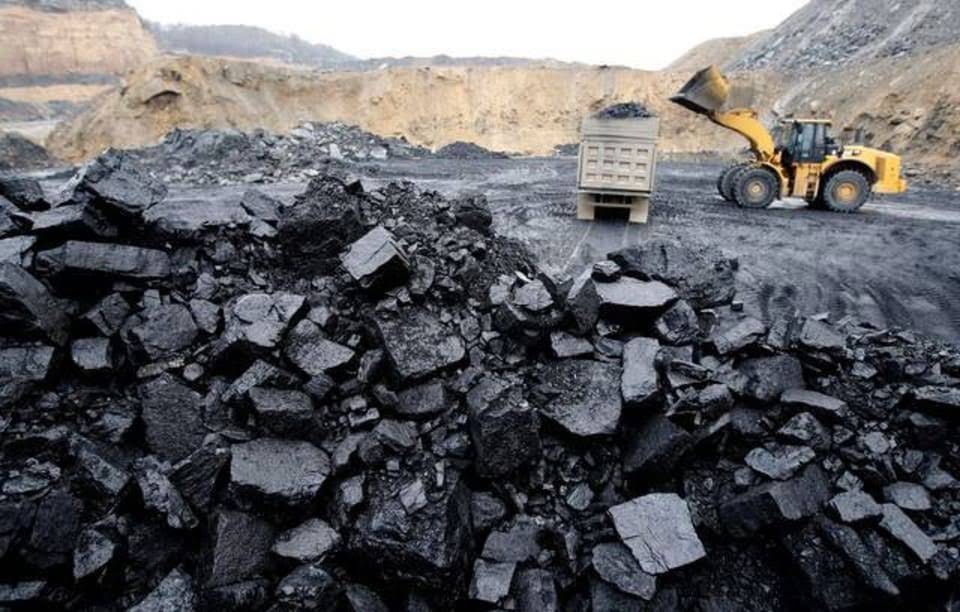

Major fund managers are increasingly heralding a sustained rally in mining and metals as capital pours into the sector at the fastest pace in years, driven by robust AI infrastructure, rising defence spending and a shift away from expensive tech stocks. Assets under management in mining exchange-traded funds more than doubled to 87.4billionbyMarch31,2026,from37 billion a year earlier.
This report consolidates key findings from major industry research and financial publications to provide investors with a comprehensive view of current mining market conditions.
1. Capital Flows & Investor Sentiment
Unprecedented Capital Rotation
Investors put 8.24billionintomininginthefirstquarterof2026,a10.8 billion turnaround compared with the first three months of 2025, when sweeping U.S. tariffs triggered outflows of $2.52 billion. BlackRock portfolio manager Evy Hambro described this as “the early stages of a commodity supercycle,” noting that capital is rotating from high-valuation tech stocks into hard assets.
Institutional vs. Retail Outlook
According to Mining IQ’s Investor Sentiment Insights 2026 report (based on a survey of 125 resource investors managing approximately US$6.8 billion in aggregate mining assets), 41.7% of investors plan to allocate more to the sector in 2026 than they did last year, with only 10.4% expecting to invest less. Institutional investors were notably more bullish than retail investors—47.4% plan higher investment volumes in mining, compared with 40.3% among retail investors.
Regional breakdown of investor sentiment:
| Region | Bullish (% planning higher investment) |
|---|---|
| South America | 48.8% |
| United States | 47.1% |
| Africa | 45.7% |
| Australia | 38.5% (least bullish) |
Source: Mining IQ Investor Sentiment Insights 2026
Canada and Australia remain the top target regions for investment in 2026.
2. Financing, M&A & Capital Expenditure
Record Financing Activity
Global mining and metals financing and M&A reached an estimated US40.32billion∗∗intotalprivateandpublicdealvaluein2026year−to−date[reference:8].Thefirstquarteralonesaw226transactionsworth∗∗US40.32billion∗∗intotalprivateandpublicdealvaluein2026year−to−date[reference:8].Thefirstquarteralonesaw226transactionsworth∗∗US43.78 billion, including 182 equity, debt and stream financings, and 44 corporate and asset-level acquisitions worth US$21.63 billion.
Gold-related deals made up 40.1% (US17.56 billion) of overall global mining and metals financing and M&A in Q1 2026, including 69 financings of US10 million or more. Copper-focused transactions accounted for 40.5% of M&A activity, while lithium financing represented 14% of total financing.
Private Equity Surge
Private equity and venture capital investment in the metals and mining sector reached US$9.09 billion in Q1 2026, significantly higher than all full-year totals in the previous five years except 2023. Private equity’s share of deal value jumped to 22.5% in Q1 2026, more than double the previous peak in 2023 and significantly higher than the 1.7% share achieved in 2025.
This surge was driven primarily by the planned US$9 billion acquisition of a 40% stake in the Mutanda copper-cobalt assets in the DRC by an investor group comprising Orion Resource Partners and the U.S. International Development Finance Corp. from Glencore.
Top 20 Miners’ Capital Expenditure (2026)
Capital expenditure by the world’s top 20 mining companies increased from US73.6billionin2024toUS79.4 billion in 2025 and is estimated to rise further to US$82.4 billion in 2026, representing a 3.8% year-on-year increase.
| Rank | Company | Planned 2026 CapEx |
|---|---|---|
| 1 | Rio Tinto | US$11.0 billion |
| 1 | BHP | US$11.0 billion |
| 2 | Barrick Gold | US$4.2 billion |
| 3 | Newmont | US$3.35 billion |
| 4 | ArcelorMittal | US$4.5–5.0 billion |
Sources: GlobalData, Rio Tinto, BHP, Barrick Gold, Newmont, ArcelorMittal corporate disclosures
Rio Tinto’s CapEx reflects a 3.5% decrease from the previous year due to the completion of major projects such as Oyu Tolgoi (US7.06billion)andSimandou(Rio′sshare:US6.2 billion). BHP’s US$11 billion budget is earmarked for strategic enhancements across copper, iron ore, and potash, including the Jansen Potash expansion, Copper South Australia, and Pilbara projects.
3. Q1 2026 Earnings Highlights
4. Commodity Price Trends (2026)
Gold
Gold exploration budgets surged 11% in 2025, with the yellow metal nearly breaking **US5,600perounce∗∗inearly2026amidescalatinggeopoliticaltensionsandrelentlesscentralbankaccumulation[reference:26].Goldcapturedamassive506.2 billion in deployed capital.
Westpac expects gold prices to rise further, with a peak of around US$5,000/oz in the March quarter of 2027. However, BMI (Fitch Solutions) notes that gold prices may see late-2026 declines as global monetary easing slows and the Fed’s rate-cutting cycle ends.
Copper
Copper has risen 30% in the last 12 months to new record highs above US$6.0/lb in early 2026. ING Group and S&P Global forecast a massive refined copper deficit of over 150,000 tonnes for 2026. Westpac notes that copper prices have recently eased, however, with concerns around demand destruction.
Lithium
Lithium surged 47% year-to-date as of late April 2026. UBS analysts predict lithium carbonate prices to reach US1,800/tonne∗∗andSC6pricestohit∗∗US1,800/tonne∗∗andSC6pricestohit∗∗US2,850/tonne by mid-2026, driven by battery storage demand. However, exploration budgets for lithium have been slashed—lithium captured just US$595 million (5% of global budgets) in 2025, reflecting a cautious financing environment.
Key Price Forecasts
| Commodity | Current (2026) | Forecast |
|---|---|---|
| Gold | Near US$5,600/oz (peak) | US$5,000/oz (Q1 2027 peak) |
| Copper | >US$6.0/lb | Deficit support continues |
| Lithium | US$1,800/t (carbonate) target | US$2,850/t SC6 by mid-2026 |
| Crude Oil (Brent) | US$100–120/bbl | US$110/bbl (Q2 2026 avg) |
Sources: S&P Global, Westpac, UBS, BMI, ING Group, Livewire Markets
5. Exploration & Development Trends
The global mining industry has pivoted decisively toward safe havens, funneling half of its entire exploration budget into gold while abandoning early-stage grassroots discoveries at a record pace. According to S&P Global Market Intelligence’s World Exploration Trends 2026 report, total nonferrous exploration budgets dipped 0.6% year-on-year to US$12.4 billion in 2025.
Key findings:
- Mine site exploration surged to a record high, accounting for 45% of all exploration dollars spent globally
- Generative grassroots exploration collapsed to an all-time low of just 21%
- Copper held its ground at 26% of global exploration budgets (US$3.3 billion)
- Lithium and nickel experienced sharp declines—lithium at just 5% (US595M),nickelat3332M)
Despite cautious capital deployment, funds raised by junior and intermediate companies more than doubled year-on-year to US$21.43 billion, though directed heavily toward advancing existing project development rather than funding greenfield exploration.
6. Key Merger & Acquisition Activity (2026)
Several notable transactions have shaped the mining M&A landscape in 2026:
M&A activity in the mining sector hit almost US94billionin2025,markingtheindustry′smostbuoyantyearformorethanadecade.Activityshowsfewsignsofslowingin2026—morethanUS11 billion of mining and metals financing and M&A was announced in January 2026 alone.
7. Major Risks & Wildcards
Wood Mackenzie’s latest report identifies three main drivers shaping global mining investment in 2026: geopolitics, the energy transition, and cautious capital investment. The report highlights several “wildcards” that may create market volatility:
- AI efficiency gains could either lift material demand via scale effects or dampen consumption through thrifting and substitution
- Battery materials face a fork—2026 may clarify whether solid-state batteries move closer to commercial reality
- Peace in Ukraine would likely lift commodity sanctions across the board from Russia
- Resource nationalism and trade barriers continue to delay supply responses
Wood Mackenzie expects oversupply in many minerals to persist through 2026, keeping many prices capped despite pockets of demand strength.
Additional risk factors:
- Geopolitical tensions in the Middle East (Strait of Hormuz disruption, ongoing Iran conflict) impacting crude oil and LNG prices
- US mid-term elections in H2 2026 as a potential policy inflection point
- Gold pullback—the VanEck Gold Miners ETF lost US710millioninMarch,thoughremainsupalmostUS1 billion year-to-date
- Cost pressures for producers as diesel prices increase, especially for open-pit operators
Conclusion
The mining sector has entered 2026 amid a broadly optimistic outlook, supported by robust capital inflows, strong commodity prices—particularly in gold and copper—and accelerating demand from AI infrastructure, grid modernization and defence spending. BlackRock portfolio manager Evy Hambro’s characterization of the “early stages of a commodity supercycle” reflects growing conviction among institutional investors.
However, this optimism is tempered by caution. Wood Mackenzie’s assessment of a “selective opportunity set” rather than a “capex supercycle” is prudent—geopolitics, capital discipline, and supply chain disruptions, not demand alone, will decide returns in 2026. For investors, the current environment represents a stock picker’s market, as noted by Baker Steel Capital Managers LLP, where careful asset selection and jurisdictional assessment will be critical to achieving superior returns.