
Dubai is well-known as the “City of Gold,” and its gold market is one of the world’s most renowned attractions. Whether you are a serious buyer or simply inquisitive, here is all you need to know.
🏆 The main attraction is Dubai’s Gold Souk The action centers around the Gold Souk in the Deira neighborhood, along the creek. It’s a traditional Arabian marketplace, with over 300 stores lining covered walkways, their displays pouring with 18K, 22K, and 24K gold.
You’ll find gold jewelry (necklaces, bangles, earrings, and intricate bridal sets), gold bars and coins, diamonds, valuable gemstones, and even platinum.
The atmosphere: Glittering pandemonium in the greatest manner. The sheer amount of gold on display—sometimes practically piled in shop windows—is incredible. Look for the world’s biggest gold ring (almost 64 kg!) at the Kanz Jewels store for a photo opportunity.
💰 How Pricing Works Dubai offers tax-free gold (no VAT for investment-grade gold bars/coins of particular purity, and 5% VAT can be negotiated for jewelry). Pricing is transparent and consists of two parts:
The daily gold rate is set worldwide and displayed clearly on electrical boards throughout the souk. You pay for the weight of gold at the current price.
Making Charges: A price for craftsmanship. This is where you have to bargain aggressively. Intricate designs are more expensive, but manufacturing costs are nearly always adjustable, especially for larger pieces.
Know the day’s gold price before you go (search “Dubai gold rate today” in AED per gram for 22K/24K). Cash payments frequently result in a lower final price than credit cards, as retailers factor card fees into the rate.
Is it all real and regulated? Yes, strictly. The government oversees Dubai’s gold trade.
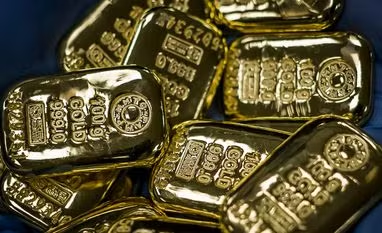
All precious metals must be hallmarked by the Dubai Central Lab. Every authentic item has a tiny stamp stating its karatage (e.g., “22K”).
Counterfeiting is almost non-existent in licensed stores because of the hefty penalties.
If you’re purchasing a diamond, request a certificate from a reputable gemological institute (GIA, IGI) to verify you get what you pay for.
Beyond the Souk: Other Gold Hubs. Gold & Diamond Park (Al Quoz): An air-conditioned, modern mall with devoted jewelry dealers and workshops. Ideal for custom designs and less frenetic browsing.
Meena Bazaar (Bur Dubai): A busy Indian-influenced bazaar with a large assortment of 22K gold and classic Indian designs, generally with competitive manufacturing costs.
Mall Boutiques: High-end international brands and local jewellers (Damas, Malabar Gold, Joyalukkas) can be found at practically every large mall, with a fixed-price environment for those who dislike bargaining.
📝 Practical Advice for First-Timers Haggle with a smile: It’s normal and part of the culture. Negotiate the making charge rather than the gold rate. Try offering 20-30% less than the quoted making charge and settling in the middle.
Carry your passport: Many establishments will require it to offer a tax-free invoice or provide export documents.
The most peaceful time to visit is on weekday mornings. The souk comes alive in the evening (businesses are normally from 10 a.m. to 10 p.m., with some closing between 1-4 p.
How to Get There: The Gold Souk is only a short cab ride from the Al Ras or Gold Souk metro stations (green line). Traditional abras (small boats) from Bur Dubai across the creek will also drop you off just steps away.
💎 Unique experiences. Gold ATMs: You can find “Gold to Go” vending machines in places like the Atlantis hotel or specific malls, which dispense small gold bars and coins at current prices.
Aside from the gigantic ring, the souk has garnered attention for the world’s heaviest gold chain and other lavish items.
Finally, Dubai’s gold market combines actual value (cheap production costs, high purity assurance) with breathtaking spectacle. Even if you don’t buy anything, walking through the Gold Souk at night, when the window displays are brighter than the streetlights, is a memorable Dubai experience.