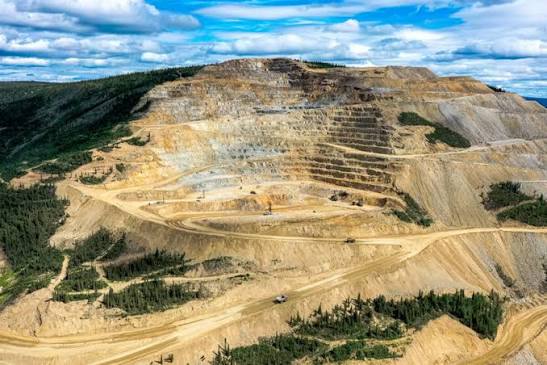

Ghana’s mining sector, underpinned on gold, has historically attracted foreign direct investment. However, as 2026 approaches, palpable concern about the security of mining leases is fundamentally changing the risk profile for investors. This is not a single regulation reform, but rather a combination of political, legal, and environmental factors that are redefining capital allocation, project durations, and due diligence approaches.
The Causes of Lease Uncertainty Current investor fear stems from three overlapping domains:
- Policy Ambiguity and Political Transition. President John Mahama’s administration, in office since January 2025, ran on a platform of resource nationalism and greater enforcement of local content. While formal legislative changes have been sluggish, the government’s rhetoric and ad hoc instructions have created an environment in which lease renewals and new applications face uncertain administrative challenges. Large-scale operators such as Gold Fields (Tarkwa), Newmont (Akyem, Ahafo South), and AngloGold Ashanti (Obuasi) have leases with different expiration dates, some of which are approaching this decade. The lack of clear, consistent renewal criteria—aside from discretionary ministerial approval—is generating worry.
- The Galamsey–Legal Mine Nexus The campaign against illicit small-scale mining (galamsey), which has destroyed forests and polluted waterways, has reached a fever pitch. Pressure from civil society, the media, and international environmental groups is pressuring the government to take decisive action. However, the crackdown has blurred the lines: lawful small-scale concessions are occasionally caught in broad moratoriums, while large-scale operators face increased environmental liability scrutiny, which can delay lease extensions. The government’s 2026 emergency actions to cancel forest reserve permits have not only alarmed the informal sector, but also highlighted the prospect of political meddling in legally granted rights.
- Financial Pressures and Renegotiation Drives Ghana’s lengthy debt restructuring and IMF programme terms necessitate stronger domestic revenue generation. Mining, being the principal foreign exchange earner, is an appealing target. The government has proposed hiking royalty rates, imposing windfall taxes, and revising stability agreements, which have previously protected some projects from fiscal changes. Investors are concerned that lease renewal processes would become vehicles for exacting increasingly onerous budgetary concessions, transforming what should be a normal administrative exercise into a high-stakes commercial transaction.
How Risk Is Reshaped in 2026 The uncertainty is crystallising into numerous discrete risk dimensions, changing the equation for boards and portfolio managers.
Increased Political and Regulatory Risk Mining leases in Ghana are no longer regarded as permanent, long-term rights, but rather as temporary advantages dependent on political will. The reality in 2026 is that a lease nearing the end of its term entails a major binary risk: seamless renewal at predictable conditions or extended delay due to required changes in ownership structure or fiscal environment. This has pushed Ghana up the political risk indices for extractive companies, with some risk underwriters raising premiums or removing breach-of-lease coverage for new policies.
Project Finance and Valuation Challenges Lenders and equity investors are stress-testing mining projects under conditions when a lease renewal is rejected or drastically amended. This might be disastrous for a corporation with only one asset or a project in its early stages. Even for diversified majors, the discount rate on Ghanaian assets is increasing. Long-term capital commitments for exploration and brownfield expansions are slowing, as “permit certainty” becomes a determining factor. In 2026, we expect more earn-in arrangements and phased investments with clear lease-renewal milestones, moving early-stage risk back to junior partners.
Operational and Supply Chain Disruption Short-term uncertainty manifests itself in port and logistical bottlenecks caused by community protests or regulatory restrictions that block truck traffic. More insidiously, the overlap between legal concessions and encroaching galamsey pits has resulted in security incidents. Investors increasingly consider “social license” stress situations, in which a community conflict compounded by lease uncertainty can grow into force majeure. This year, numerous operators have secretly upped their spending on private security and community development agreements to protect against lease-related turmoil.
Reputation and ESG Contagion With the EU’s Corporate Sustainability Due Diligence Directive and tougher investor criteria, any association with land grabs, environmental degradation, or human rights violations—even if committed by illegal miners on a company’s concession—may result in divestment. Uncertainty about lease boundaries and governmental enforcement capacity implies that a corporation may be held accountable for conduct over which it has no control. This is transforming risk from a merely operational concern to a compliance and brand threat, with the potential to disrupt global finance arrangements.
Investor Responses: Hedging and Engagement. Faced with this landscape, mining investors in 2026 are implementing a variety of strategies:
Portfolio Diversification and Capital Recycling: Some mid-tier companies are quietly seeking purchasers for their Ghanaian exploration permits or minority holdings in working mines, preferring to shift capital to more predictable jurisdictions such as Côte d’Ivoire or Saudi Arabia.
Enhanced Due Diligence: Legal audits now extend beyond title verification. Investors are tracing the political networks that underpin specific leases, analysing historical legislative debates, and even employing scenario-planning tools to forecast election results in 2028 and their impact on lease security.
Structured Engagement: Key actors are forming collaborative lobbying groups to advocate for a transparent, codified lease renewal mechanism. There is a widespread desire for an amendment to the Minerals and Mining Act (Act 703) that would establish objective standards and timetables, thereby limiting ministerial discretion. Some corporations are connecting new investments to the official implementation of such measures.
Political Risk Insurance (PRI): Demand for PRI products covering expropriation, breach of contract, and transfer restriction has skyrocketed. While still pricey, it is become the standard risk management tool for any Ghanaian project with a capital commitment of more than $100 million.
Local Equity Partnerships: To reduce the possibility of forced indigenisation, some multinational corporations are actively bringing in Ghanaian institutional investors (such as pension funds) as minority partners, aligning lease renewal incentives with domestic political interests.
Outlook: A Fork in the Road. The rest of 2026 will be defining. If the Mahama administration successfully implements a clear, investor-consulted lease renewal framework—perhaps as part of a larger mining sector overhaul tied to IMF benchmarks—Ghana may be able to distinguish itself from more radical African resource nationalists and reclaim its reputation as a stable mining destination. The prize would be a new round of investment in exploration and mine life extension.
In contrast, if lease decisions continue to appear arbitrary, stuck between electoral politics and the galamsey crisis, investor risk will rise dramatically. Capital flight from junior exploration will intensify, and even established producers will prioritize cash generation over reinvestment. The long-term cost would be measured not just in lost foreign dollars, but also in a premature decline in production for one of Africa’s most important gold producers.
For investors, the buzzword in Ghana’s mining sector in 2026 is “optionality.” Assets with near-term lease renewals are valued with wide risk spreads, but those with solid, long-term leases attract a premium. The market is pricing in a regime shift—not in government, but in the structure of the state’s agreement with the mining industry.