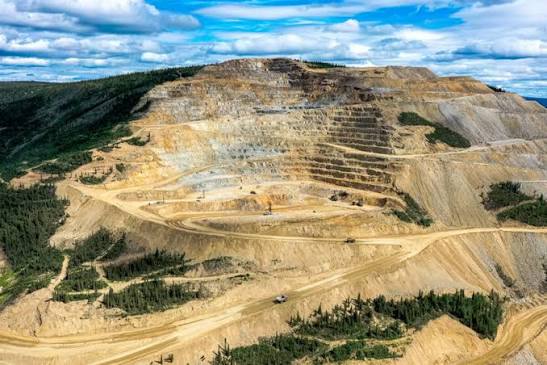

Investing in Ghana’s mining sector requires a specific method based on the company and whether you are a Ghanaian resident, non-resident Ghanaian, or international investor. Here is a step-by-step instruction for the various approaches.
- Understand the landscape of Ghana’s mining shares. Ghana is Africa’s biggest gold producer. Most big mining activities are managed by multinational corporations, and not all of them are listed on the Ghana Stock Exchange (GSE).
Mining shares can be bought on the Ghana Stock Exchange. The GSE currently has only one pure-play mining stock listed:
AngloGold Ashanti Limited (AGA) is a dual-listed business, trading on both the JSE and NYSE. It operates Ghana’s Obuasi and Iduapriem gold mines. Golden Star Resources was previously listed on the GSE before being delisted upon its acquisition in 2022.
Mining firms with Ghanaian operations—listed elsewhere Many large miners are only available on international exchanges. Examples:
Newmont Corporation (Ahafo, Akyem mines) – NYSE
Gold Fields Limited (Tarkwa and Damang mines) – JSE, NYSE
Perseus Mining (Edikan, Sissingué) – ASX, TSX
Asante Gold Corporation (Bibiani, Chirano) – CSE, Frankfurt
You can obtain exposure to Ghana’s mining industry by purchasing these shares on the principal exchanges (more on this in Option 2).
Unlisted Mining Ventures Not all exploration companies are listed, including smaller and junior ones. Investing in them is private equity, which is highly illiquid and hazardous. This guide focuses on shares that are publicly traded.
- Option A: Buy AngloGold Ashanti on the Ghana Stock Exchange (GSE). This is the most straightforward option for anyone looking to invest locally in Ghana cedis.
Step 1: Select a licensed stockbroker. All GSE trades must be conducted through a licensed dealing member (broker). The full list is available on the GSE website (gse.com.gh). Popular brokerage businesses include:
IC Securities
Databank Brokerage
Stanbic Bank Brokerage
Blackstar Advisors
SIC Brokerage
Most firms offer accounts for both residents and non-residents.
Step 2: Open a securities trading account. You’ll need:
A completed account opening form (supplied by the broker)
Valid photo identification (passport, national ID, voter’s ID)
Proof of residential address (utility bill or bank statement).
One or two passport-sized pictures.
Tax Identification Number (TIN) – necessary for Ghanaians; for foreigners, a TIN can be readily obtained, or sometimes the broker assists.
The broker will assist you in opening a Central Securities Depository (CSD) account with Central Securities Depository Ghana Ltd. This account stores your shares electronically.
Step 3: Fund your account. Residents can fund in Ghana cedis directly from their local bank account.
Non-residents can transfer foreign currency (USD, GBP, EUR) to the broker’s client account. The broker will change it into cedis at the current rate. Note that there are no limits on overseas investors bringing in capital to purchase GSE stocks. Dividends and capital gains can be repatriated after meeting tax requirements via the banking system.
Step 4: Place the order. Instruct your broker to purchase AngloGold Ashanti (AGA) shares. You can place:
A limit order (specify the maximum price)
A market order (purchase at the current market price)
The trade is confirmed by the broker, and settlement normally takes T+3 (three business days after the trading date). Your CSD account will be credited with the shares.
Step 5: Receiving dividends and corporate activities. Dividends on AGA are paid in Ghana cedis (or US dollars if you qualify). Dividends are taxed at 8% for both residents and non-residents, subject to relevant double-taxation treaties.
- Option B: Buy multinational mining stocks with Ghana operations. If you want to buy Newmont, Gold Fields, Perseus, or Asante Gold, you must do it on their respective primary exchanges.
How to do it from Ghana
Some Ghanaian brokers (e.g., IC Securities, Databank) have partnerships that allow clients to trade on specified overseas marketplaces like the JSE or NYSE. You’d open a separate foreign trading account, fund it in hard currency, and the broker routes the order.
Alternatively, open an account directly with an international online broker (e.g., Interactive Brokers, Charles Schwab, Saxo Bank) that welcomes Ghanaian residents. You’ll need a bank account that can send USD/EUR abroad – this may require Bank of Ghana foreign exchange approval for portfolio investments if you are a resident sending monies offshore.
For non‑residents (foreign investors) You simply use your existing international brokerage account. There is no need to use Ghanaian intermediaries unless you particularly desire to hold the shares through a Ghanaian custodian.
- Key regulatory points for foreign investors in GSE mining shares No capital controls: Foreigners can invest freely in GSE‑listed shares.
Repatriation: Dividends and sale proceeds can be repatriated through the banking system by producing the trade contract note and CSD statement.
Tax: Dividend withholding tax 8%. Capital gains tax on listed securities is normally not applicable to people (Ghana does not currently collect capital gains tax on gains from the sale of shares listed on the GSE for individuals; nevertheless, always confirm with a tax professional).
Exchange rate risk: AGA shares are priced in cedis on the GSE. The underlying business receives revenue in dollars, therefore the stock often functions as a hedge, but your gains in foreign‑currency terms will fluctuate with the cedi.
- Practical tips before you start Research the company: For AngloGold Ashanti, read yearly reports, production updates and analyst remarks. Pay attention to gold price fluctuations, operating costs in Ghana and geopolitical/regulatory changes.
Understand liquidity: AGA is one of the most liquid companies on the GSE, but trading volumes are relatively low compared to international exchanges. Large orders may affect the pricing.
Broker fees: Commissions are adjustable but normally vary from 0.5% to 1.5% of deal value. Shop around.
Custody: Your shares are held electronically at the CSD, not by the broker. That protects you in case the broker gets into problems.
Get tax advice: Especially if you are a foreign investor, investigate whether your home country has a double‑taxation agreement with Ghana that decreases the 8% withholding tax.
Summary checklist Decide whether you want AGA (purchase on GSE) or Newmont/Gold Fields/etc. (buy on foreign currency).
Choose a broker—local for GSE, international for foreign markets.
Open an account and provide KYC papers.
Fund – cedis for GSE; hard currency for overseas trades.
Place an order and track your investment.
Manage – receive dividends, and file tax returns as needed.