
Based on the latest policy developments from the 2026 Union Budget and current market data, investing in India’s mining sector offers significant opportunities, particularly in rare earth minerals, coal, and non-ferrous metals like copper and aluminum. The government is actively reshaping the sector to reduce import dependence and attract foreign investment.
Below is a detailed guide to help you navigate this evolving landscape.
🧭 The New Policy Landscape
The Indian government has introduced several landmark reforms that are reshaping the investment case for mining. The most significant is the push for self-reliance in critical minerals.
- 100% FDI in Coal Mining: The government now allows 100% foreign direct investment in coal mining, associated infrastructure, and the sale of fuel. Previously, foreign investment was restricted to captive mines (for a company’s own use) .
- The Critical Minerals Push: The Union Budget 2026-27 has launched a strategic initiative to build a domestic ecosystem for critical minerals, especially Rare Earth Elements (REEs). This is a direct move to counter China’s dominance in the global supply chain .
- Tax and Financial Incentives: To encourage exploration, the Finance Bill 2026 extended tax deductions for prospecting and exploration expenses to a host of critical minerals like lithium, graphite, and potash . Furthermore, a scheme with an outlay of over $800 million was approved to establish 6,000 metric tons per annum of rare earth permanent magnet manufacturing capacity .
📈 Key Sub-Sectors to Watch
1. Rare Earth Minerals (Highest Growth Potential)
This is the government’s top priority. The goal is to create a complete value chain from mining to manufacturing of high-tech components .
- Why the Buzz? Rare earths are essential for electric vehicles (EVs), wind turbines, semiconductors, and defense electronics. India aims to break China’s supply chain monopoly .
- Government Action: The government has announced the creation of dedicated Rare Earth Corridors in four mineral-rich states: Odisha, Kerala, Andhra Pradesh, and Tamil Nadu. These corridors will integrate mining, processing, and research facilities .
- Investment Angle: The policy is expected to benefit public sector enterprises and companies involved in mineral extraction in these regions.
- Potential Beneficiaries: Gujarat Mineral Development Corporation (GMDC) and NLC India are seen as potential beneficiaries due to their existing presence in mineral extraction and processing .
- Downstream Impact: A stronger domestic supply chain will also support EV and auto manufacturers like Tata Motors, Mahindra & Mahindra, and Maruti Suzuki, which rely on these materials .
2. Coal (Mature Sector with New Rules)

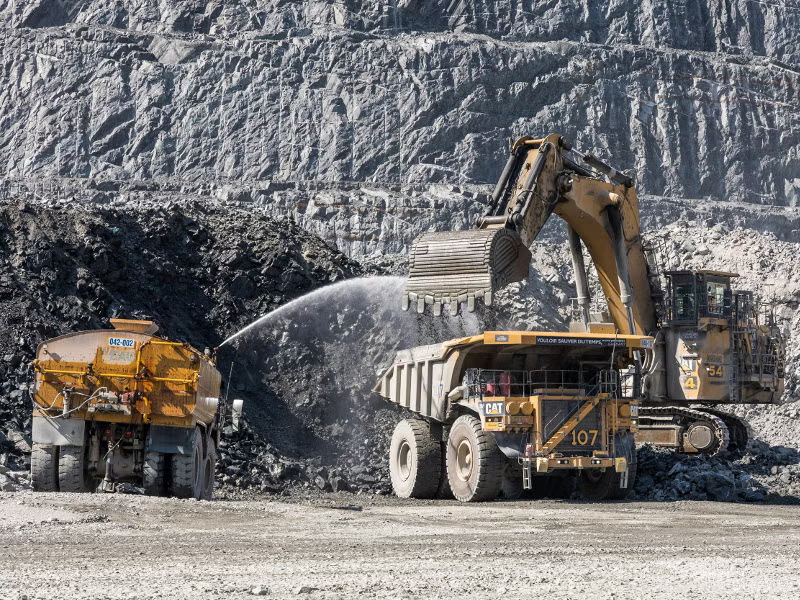
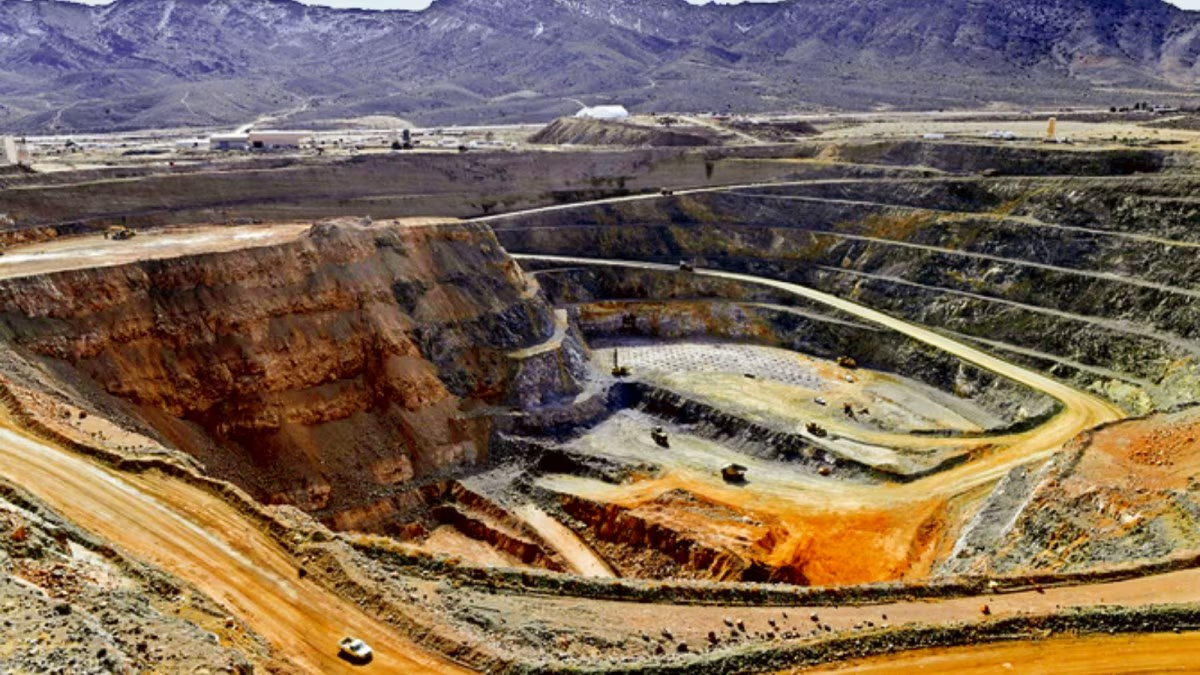
The coal sector has been opened up to private and foreign players, making it a more accessible investment.
- Market Reality: Coal remains a critical energy source. Coal India Limited (CIL), which accounts for 80% of the country’s coal production, is taking steps to ensure supply stability . Recent auctions show strong demand, with some coal grades fetching premiums of over 130% .
- Investment Angle: The sector offers opportunities for large-scale, integrated players.
3. Non-Ferrous Metals (Copper, Aluminum, Steel)
This sector is driven by strong domestic demand from government infrastructure spending, though global factors play a big role.
- Copper: This is a bright spot, driven by the energy transition and e-mobility.
- Steel: The sector is balancing strong domestic demand with margin pressures from global oversupply.
- Key Player: JSW Steel is a top pick for analysts at Motilal Oswal (‘Buy’ rating, target ₹1,400). The firm is investing heavily in capacity expansion and securing its own raw material sources (like coking coal) to lower costs and improve margins .
- Other Performers: In 2025, metal stocks like Hindalco (+35%) and Tata Steel (+21%) outperformed the broader markets, signaling strong investor confidence .
4. Gold (A Safe-Haven Play)
Gold stocks provide a hedge against economic uncertainty and inflation.
- Market Context: Gold stocks can perform well when markets are unstable. The sector in India benefits from immense cultural and economic demand for the metal .
- Investment Angle: You can gain exposure through established gold mining companies.
📊 Summary of Investment Opportunities
👍 Practical Steps for Investors
- Do Your Own Research (DYOR): The mining sector is capital-intensive and subject to policy, environmental, and global price risks. Always check the latest financials and announcements of any company you consider.
- Focus on Policy Themes: Align your investments with government initiatives like the “Rare Earth Corridors” and the “National Critical Mineral Mission,” as these come with strong financial and policy backing .
- Check Brokerage Recommendations: Look at the latest reports from firms like Motilal Oswal, Anand Rathi, and ICICI Securities for detailed analysis and price targets, such as the ones cited for Hindustan Copper and JSW Steel .
- Understand the Risks: Be aware of global headwinds, such as volatile input costs (e.g., coking coal for steel) and international trade policies (e.g., the EU’s Carbon Border Adjustment Mechanism), which can impact profitability .
India’s mining sector is at a pivotal moment, driven by a clear government vision for self-reliance. By focusing on the high-growth areas of critical minerals and metals that support the energy transition, you can position yourself to benefit from this structural shift.
mining news today
mining news headlines
mining industry news
latest mining news
mining news and updates