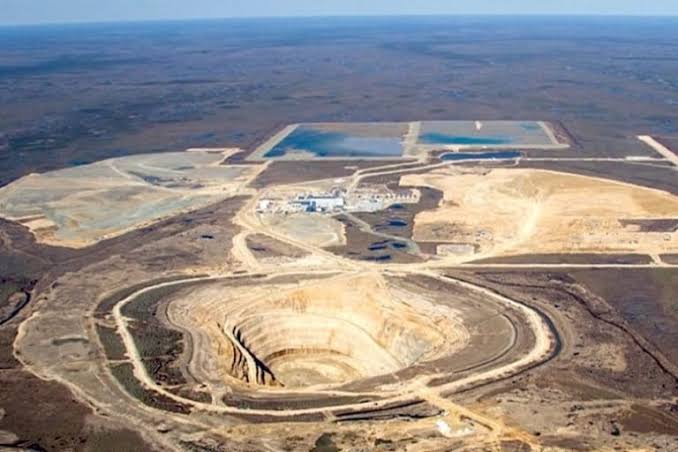

The headline alludes to the current disagreement between the Greenlandic government and the Australian-listed mining corporation Energy Transition Minerals over the projected Kvanefjeld Project.
What happened?
On June 26, 2026, Greenland’s government denied Energy Transition Minerals’ (ETM) application to extend its exploration licence for the Kvanefjeld project in southern Greenland. The government determined that the licence did not meet the standards for renewal under Greenland’s mining statute.
The judgment is another setback for ETM, whose project has been effectively delayed since Greenland enacted legislation prohibiting uranium mining in 2021. Because uranium exists alongside the rare earth minerals at Kvanefjeld, the ban rendered the project commercially unviable.
Why is it controversial?
Supporters of the Greenlandic government’s decision contend that:
Greenland has the sovereign right to determine how its natural resources are developed.
Many people of the surrounding town of Narsaq have long opposed the project, citing fears about radioactive waste, water quality, farming and fishing livelihoods, and environmental consequences.
Governments should be permitted to improve environmental regulations without being pressured by transnational firms.
The expression “stands up to bullying” originates in an opinion piece published by Green Left, an Australian left-wing journal. It reflects the publication’s editorial position rather than providing an unbiased account of events.
ETM’s Position
Energy Transition Minerals maintains that:
Greenland’s actions are politically motivated, and they have unfairly altered the regulations following years of investment.
The company has invested heavily in the project’s development.
Greenland’s regulatory process causes uncertainty for investors in vital minerals.
ETM is taking legal action to collect billions of dollars in compensation, saying that Greenland’s uranium prohibition and subsequent license decisions effectively expropriated its investment.
Why are investors watching?
The issue has become one of the world’s most carefully watched mining investment disputes, raising fundamental questions about:
The balance of investor rights and national sovereignty.
Environmental protection versus crucial mineral development.
Political and regulatory concerns in frontier mining states.
How countries handle important rare earth resources in the face of increased geopolitical competition.