
Executive Synopsis
The market for mining gear and equipment in the United States is expected to grow steadily over the long run. The broader U.S. mining equipment sector generated 17.7 𝑏 𝑖 𝑙 𝑙 𝑖 𝑜 𝑛 ∗ ∗ 𝑖 𝑛 2024 𝑎 𝑛 𝑑 𝑖 𝑠 𝑒 𝑥 𝑝 𝑒 𝑐 𝑡 𝑒 𝑑 𝑡 𝑜 𝑔 𝑟 𝑜 𝑤 𝑎 𝑡 𝑎 ∗ ∗ 𝐶 𝐴 𝐺 𝑅 𝑜 𝑓 4.1 17.7 billion∗∗in2024andisexpectedtogrowata∗∗CAGRof4.1 25.3 billion by 2033. Other industry definitions—covering machinery for sorting, mixing, agglomerating and shaping of mined solids—produced 1.8 𝑏 𝑖 𝑙 𝑙 𝑖 𝑜 𝑛 ∗ ∗ 𝑖 𝑛 2024 𝑎 𝑛 𝑑 𝑎 𝑟 𝑒 𝑓 𝑜 𝑟 𝑒 𝑐 𝑎 𝑠 𝑡 𝑡 𝑜 𝑟 𝑖 𝑠 𝑒 𝑡 𝑜 ∗ ∗ 1.8 billion∗∗in2024andareforecasttoriseto∗∗2.7 billion by 2035 (CAGR +3.8 %).
Important motivators consist of:
More than 60,000 transportation projects have been made possible by infrastructure expenditure under the Infrastructure Investment and Jobs Act, which has increased demand for minerals and aggregates.
Automation and electrification as mines swap out their outdated diesel fleets for battery-electric vehicles to reduce emissions and ventilation expenses.
The energy shift is supported by critical minerals including copper, cobalt, and lithium.
The transition to safer, cleaner equipment is being accelerated by regulatory pressures, such as the EPA’s proposed Tier 5 diesel regulations.
North America as a whole was valued at 23.0 𝑏 𝑖 𝑙 𝑙 𝑖 𝑜 𝑛 𝑖 𝑛 2025 ∗ ∗ 𝑎 𝑛 𝑑 𝑖 𝑠 𝑝 𝑟 𝑒 𝑑 𝑖 𝑐 𝑡 𝑒 𝑑 𝑡 𝑜 𝑟 𝑒 𝑎 𝑐 ℎ ∗ ∗ 23.0 billionin2025∗∗andispredictedtoreach∗∗36.4 billion by 2035 (CAGR 4.8 %) with the United States accounting for the largest share.
Overview of the Market and Segmentation
- By Equipment Type Segment 2024 Revenue Share/Value Growth Projection
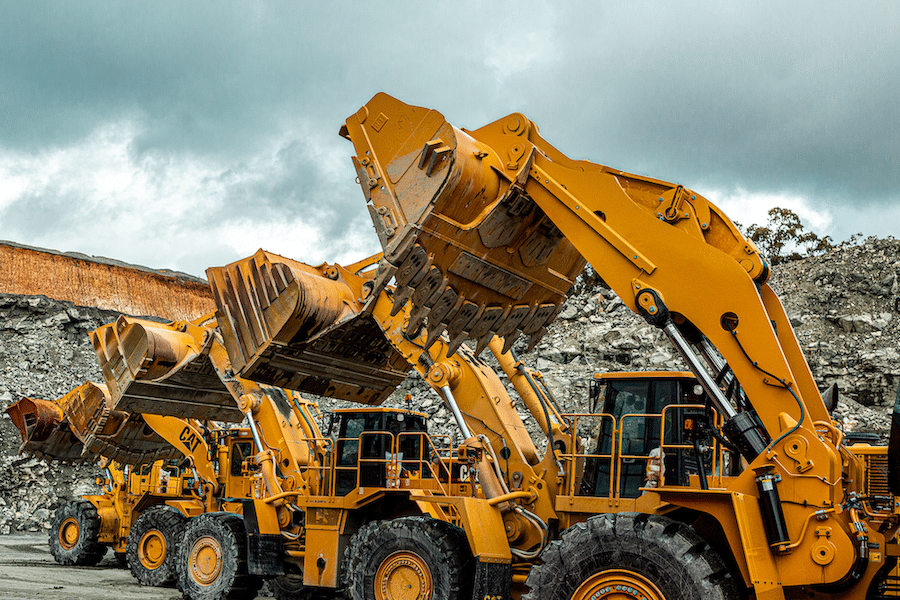
Equipment for Surface Mininglargest category (46.79% of the US market in 2024)Consistent expansion as a result of cost-effectiveness, increased capacity, and safety compared to subterranean techniques
Underground Mining Equipment is the fastest-growing market in the United States, with deeper mines and automation driving faster growth (10.11% CAGR through 2030) from 4,967 million in 2024 to 6,441 million by 2030 (CAGR 4.4%).
Equipment for crushing, pulverizing, and screening makes up 53.21% of the remaining solid demand from mineral processing and aggregates.
Breakers and DrillsIncluded in the “other” sectionmoderate expansion, bolstered by drilling for exploration and development
Load-Haul-Dump (LHD) trucks are the fastest-growing subsegment in underground mining and the greatest revenue-generating subsegment in 2024. - By Application Due to the demand for EV batteries and energy-transition metals, metal mining (copper, iron ore, lithium, and cobalt) accounted for 47.12% of U.S. mining equipment revenue in 2024 and is expanding at the quickest pace (10.23% CAGR through 2030).
Although it still accounts for around 44.9% of the demand for underground vehicles in North America in 2025, coal mining’s relative share is decreasing as coal-fired electricity phases down.
Building infrastructure supports non-metal mining (aggregates, industrial minerals).
- By Source of Power
Power Source Revenue Share Growth Forecast for 2024
Due to emission limitations, gasoline and diesel account for 65.97% of the market.
Electric/Battery-ElectricThe fastest-growing but smaller share (11.23% CAGR until 2030)Lower ventilation costs, a 65% decrease in the cost per tonne moved, and maintenance savings of 10% to 15% are driving rapid adoption. - In 2024, machines with a power output of 500–2,000 HP held 56.55% of the market, making them the most popular class for large-scale surface mining.
Through 2030, <500 HP equipment is predicted to rise at a compound annual growth rate (CAGR) of 8.75%, indicating the increasing need for small, adaptable machinery in smaller quarries and mines.
Important Market Trends (through 2035) Mine Fleet Electrification
Now that lithium-iron-phosphate batteries can support 24-hour duty cycles, battery-electric haul trucks can equal diesel uptime.
Significant cost benefits include 10–15% maintenance savings, a 65% decrease in the cost per tonne transported, and reduced ventilation costs—which are crucial for deep mines.
To shorten switch times and increase powertrain longevity, OEMs are giving priority to modular battery packs and on-board energy management software.
🤖 Digital-Mine Transition & Automation
With the elimination of human-operator accident incidents and notable productivity increases, autonomous haulage fleets have progressed from pilot projects to mission-critical production assets.
By combining real-time data from drilling, hauling, and processing, digital twins enable predictive maintenance and minimize unscheduled downtime.
Autonomous solutions are further validated by labor shortages in remote areas (such as the North of Canada and the Midwest of the United States).
AI-enabled fleet coordination and remote operation platforms are expected to propel the robust growth of the U.S. mining automation market.
📊 Smart Analytics and IoT
Real-time monitoring of bearing vibration, hydraulic pressure, and payload distribution is made possible by telematics and IoT-enabled sensors.
Predictive maintenance, asset longevity, and route optimization are all made possible by AI algorithms.
Innovations catered to local operating needs are being fostered by partnerships between mining businesses and technology providers.
🏗️ Demand Led by Infrastructure
Over 60,000 transportation projects have been made possible by the Infrastructure Investment and Jobs Act, significantly increasing the need for aggregates, crushed stone, and industrial minerals.

Pull-through for loaders, crushers, and screening systems is consistently produced by the CHIPS Act and Inflation Reduction Act incentives for semiconductor and battery operations.
⚠️ Drivers of Regulation
The advanced after-treatment systems required by the EPA’s proposed Tier 5 diesel regulations will increase unit costs and make capital budgeting more difficult for mid-tier miners. This forces businesses to standardize on fleets with zero emissions.
Battery-electric vehicle adoption is being directly accelerated by Mine Safety and Health Administration (MSHA) ventilation regulations in underground mines.
Competitive Environment: Concentration of Global Markets
The top two manufacturers, Komatsu and Caterpillar, together control more than half of the global market for mining machinery, making the industry very consolidated. By 2025:
Rank, Home Country, and Worldwide Sales (US$ million)
1 Caterpillar Inc. United States 12,389 2 Komatsu Ltd. Japan 12,204 3 Sandvik AB Sweden 6,738 4 Epiroc Group Sweden 5,767 5 Metso Corporation Finland 5,060
Source: 2025 Global Mining Equipment Manufacturers Top 50 ranking (sales based on the most recent statistics or the 2024 fiscal year)
After Europe and Japan, the United States is the world’s top producer of mining equipment. John Deere (ranked 20th), Terex (ranked 16th), Astec Industries (ranked 25th), and Boart Longyear (ranked 34th) are among the other significant American businesses on the global list.
Important Companies in the U.S. Market Their Function in the U.S. Market
Caterpillar, Inc.Market leader; introduced portable fast-charging systems and battery-electric loaders in September 2024. 15.9% of the worldwide market
Komatsu (Global Joy)AI-enabled fleet coordination, growing electrified platforms, and a significant presence in underground mining equipment
In February 2025, Sandvik AB signed a significant contract with BHP for automation and subterranean equipment.
Epiroc AB expanded its product lines with real-time diagnostics while concentrating on digital and electric solutions.
Construction Machinery from HitachiLeading manufacturer of surface mining equipment and excavators
Metso Outotec is a major provider of equipment for mineral processing, screening, and crushing.
View the complete list of important players:
Difficulties and Limitations
⛓️ Supply Chain Unpredictability
Global supply networks were interrupted by the COVID-19 pandemic, which resulted in longer lead times and delays in the acquisition of necessary components.
Diesel prices have increased by about 40% due to geopolitical concerns (such as the Middle East conflict), while ocean freight costs have increased by 30% due to rerouting and war-risk insurance surcharges.
💰 Variations in Raw Material Prices
Production costs and manufacturer margins are directly impacted by the ongoing volatility of steel and other input costs.
⚖️ Complexity of Regulation
It can be expensive and time-consuming to navigate EPA, MSHA, and state-level mining laws.
Advanced after-treatment systems are required by Tier 5 diesel specifications, which drives up unit costs. Smaller miners prefer component retrofits or rental agreements in order to stay compliant without making significant upfront investments.
🛠️ Skills Gap & Ageing Workforce
Operations are nevertheless hampered by labor shortages in distant mining areas, which both indirectly encourage the deployment of automation and create implementation challenges for less-digitized mines.
Knowledge transfer and training are crucial since skilled mining equipment operators and maintenance personnel are getting older on average.
📉 Volatility of Metals Prices
Even though commodity prices are now favorable, mining businesses may postpone capital expenditures due to price instability in copper, iron ore, and lithium, which might have an impact on equipment orders.
Prospects for 2035
CAGR scenarioImportant Premises
Baseline (mining equipment in the United States)4.1% Consistent automation adoption, modest commodity prices, and ongoing infrastructure spending
Baseline (North America) 4.8% Growth is led by the United States (CAGR 6.2% for underground vehicles), with contributions from Canada and Mexico.
5.5–6.5% faster adoption of EVs than anticipated; rapid growth of essential minerals; and advancements in battery technology
Disrupted 2.5–3.5% Extended supply chain interruptions; significant correction in the price of metals; delays in regulations
Due to deeper reserves and the requirement for advanced automated equipment, underground mining will surpass surface mining. It is predicted that mobile mining equipment (such as haul trucks, hydraulic shovels, and underground loaders) will increase from 71.4 billion dollars globally in 2025 to 123.1 billion dollars by 2035 (CAGR 5.6%), with North America being a major growth region.
The American market will be distinguished by the following by 2035:
extensive use of autonomous drilling and haulage in both surface and subterranean activities.
The majority of new equipment sales will be electrified due to a mix of corporate ESG objectives, total cost of ownership savings, and regulations.
Predictive maintenance made possible by IoT is a standard feature that reduces downtime and maximizes fleet utilization.
Consolidation will continue as larger manufacturers combine automation and emission-free powertrains into single service packages, providing buyers with more obvious advantages in terms of total cost of ownership.
In conclusion
Strong demand from infrastructure projects, the energy-transition metals boom, and a wave of technical modernization are driving the U.S. mining machinery and equipment market’s steady growth trajectory through 2035. The two most disruptive forces that are changing fleet makeup, operational models, and safety results are electrification and automation.
Although regulatory complexity and supply chain weaknesses pose challenges, the long-term prognosis is still favorable. Success for those involved in the industry will depend on:
putting money into research and development for digital integration, autonomy, and battery technologies.
constructing robust supply networks to reduce logistical and geopolitical concerns.
collaborating with mining firms to provide turnkey solutions that lower total cost of ownership and hasten the shift to fully automated, zero-emission mines.
The subsurface sector and critical-minerals applications will propel the quickest growth, and the United States will continue to dominate the North American market. The industry will look very different by 2035—it will be more autonomous, electronic, and data-driven—but there will always be a need for dependable, effective mining equipment.